Radishes
Crisp, peppery root vegetable low in calories.
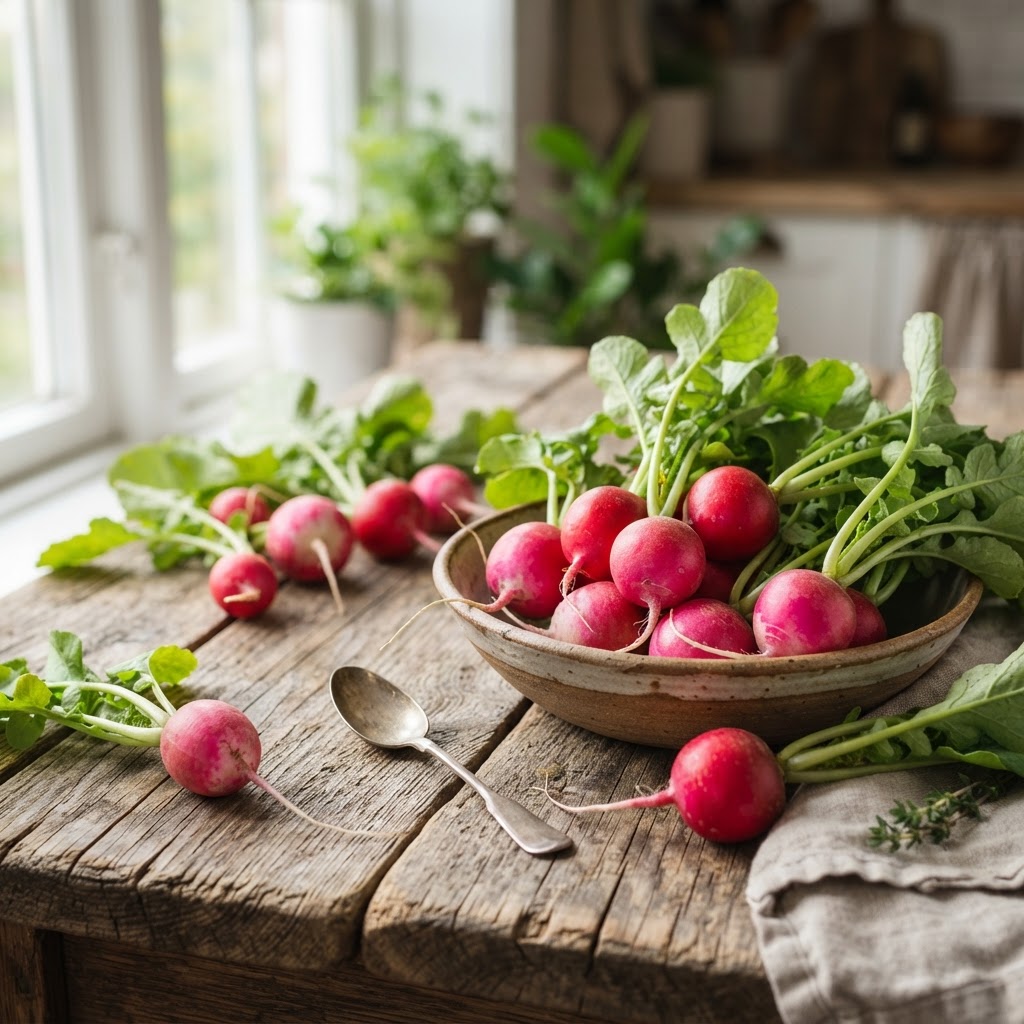
Radishes are vibrant, peppery root vegetables that pack an impressive nutritional punch in a compact package. Often overlooked as a mere garnish, these crunchy wonders are essential tools for stabilizing blood sugar and supporting systemic health through their unique profile of antioxidants and fiber.

Quick Facts
Nutrition Snapshot
Health Benefits
What the Research Says
Studies suggest that the sulfur compounds in cruciferous vegetables like radishes may improve insulin sensitivity and support metabolic homeostasis.
Preliminary laboratory research indicates potential anti-inflammatory properties of radish root extracts, though large-scale human clinical trials are still needed.
How to Cook It
Preparation Tips
- •Roast them at high heat to mellow the pungency and bring out a natural, nutty sweetness.
- •Quick-pickle them in apple cider vinegar and a touch of stevia for a blood-sugar-friendly condiment.
- •Use raw slices as a high-crunch vehicle for avocado or hummus instead of crackers.
Flavor Pairings
- •Fresh dill
- •Lemon juice
- •Sea salt
- •Toasted walnuts
Storage Tips
- •Trim the greens immediately as they draw moisture and nutrients from the root.
- •Place in a paper towel-lined container to maintain optimal crispness for up to a week.
How to Pick the Best One at the Store
Selection Tips
- •Choose radishes that are firm and heavy for their size; soft spots indicate aging.
- •Look for vibrant, bright red skin that is free from deep cracks or woody scars.
- •If the greens are attached, they should look perky and green, not wilted or slimy.
- •Avoid abnormally large radishes, as they can sometimes have a hollow, woody core.
Recipes Using Radishes

Crispy Roasted Radish Bites
Roasted radishes take on a mellow, potato-like flavor that makes for a perfect heart-healthy snack.

Zesty Radish and Cucumber Salad
This refreshing salad is packed with hydrating vegetables to support energy and digestive health.

Radish and Green Bean Sauté
A quick, anti-inflammatory sauté that makes an excellent weeknight dinner side.
Frequently Asked Questions
Can I eat the radish greens?
Yes! The greens are entirely edible, nutrient-dense, and delicious when sautéed like kale or blended into a pesto.
Are radishes safe for a diabetic diet?
Absolutely. With a very low glycemic index and high water content, they provide satisfying crunch without spiking blood sugar levels.