Asparagus
Spring vegetable rich in folate and antioxidants.
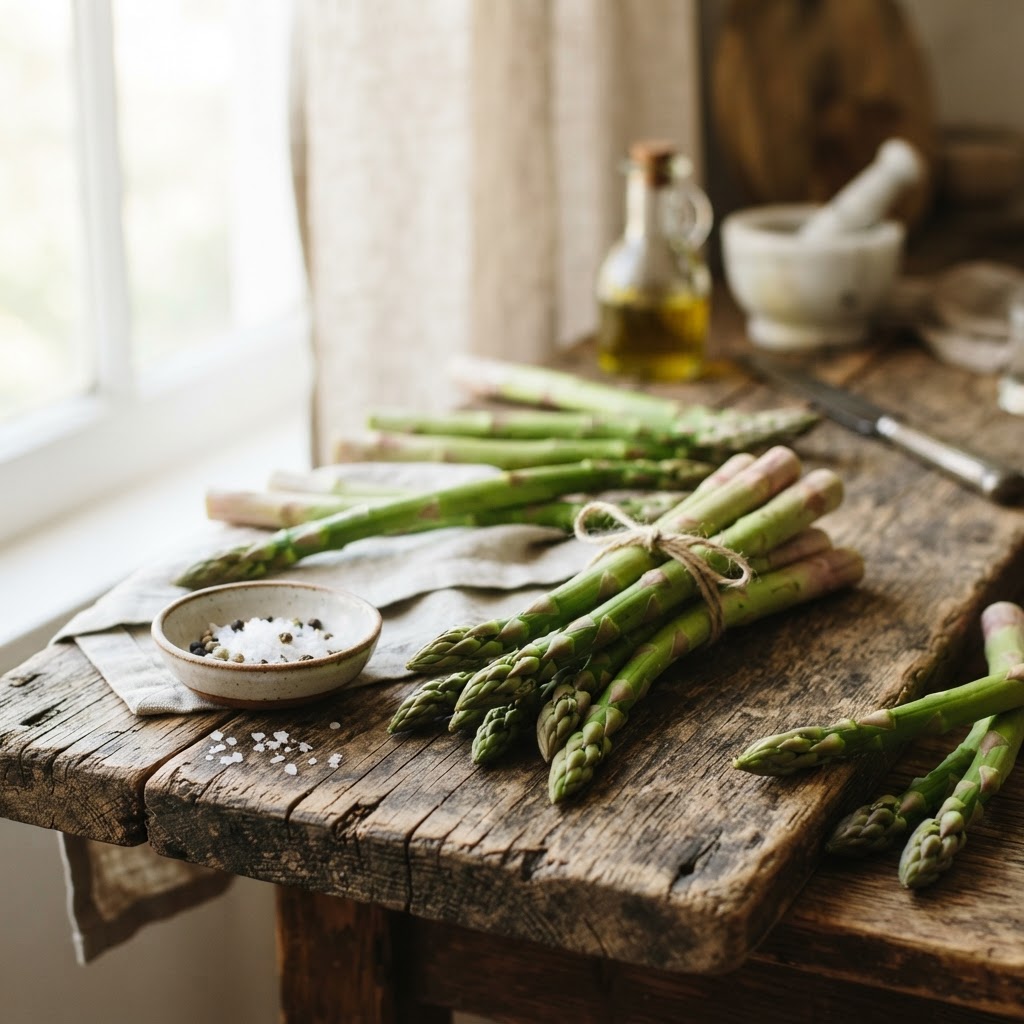
Delicate and verdant, asparagus is a springtime delight that offers a wealth of nutritional benefits to support your wellness journey. Its crisp texture and subtly earthy flavor make it a versatile addition to any meal, perfect for nourishing your body and mind as you focus on recovery and health.
Quick Facts
Nutrition Snapshot
Health Benefits
What the Research Says
Studies indicate that asparagus contains a variety of antioxidants, including flavonoids and phenolic acids, which help combat oxidative stress. This can contribute to reducing inflammation in the body, a key factor in chronic disease prevention and recovery.
Research suggests that nutrients like folate and vitamin E found in asparagus may play a role in protecting against age-related cognitive decline. While more human studies are needed, the evidence points to potential benefits for brain health and Alzheimer's prevention.
How to Cook It
Preparation Tips
- •Snap off the woody ends; they'll naturally break at the tender point.
- •Don't overcook! Asparagus is best when still vibrant green and tender-crisp.
- •Blanching briefly in boiling water then shocking in ice water preserves color and texture for salads or cold dishes.
Flavor Pairings
- •Lemon
- •Garlic
- •Parmesan cheese
- •Eggs
Storage Tips
- •Trim about an inch off the bottoms before storing.
- •Treat it like a bouquet of flowers: stand spears upright in a glass with about an inch of water, then loosely cover with a plastic bag and refrigerate.
- •Use within 3-4 days for optimal freshness and flavor.
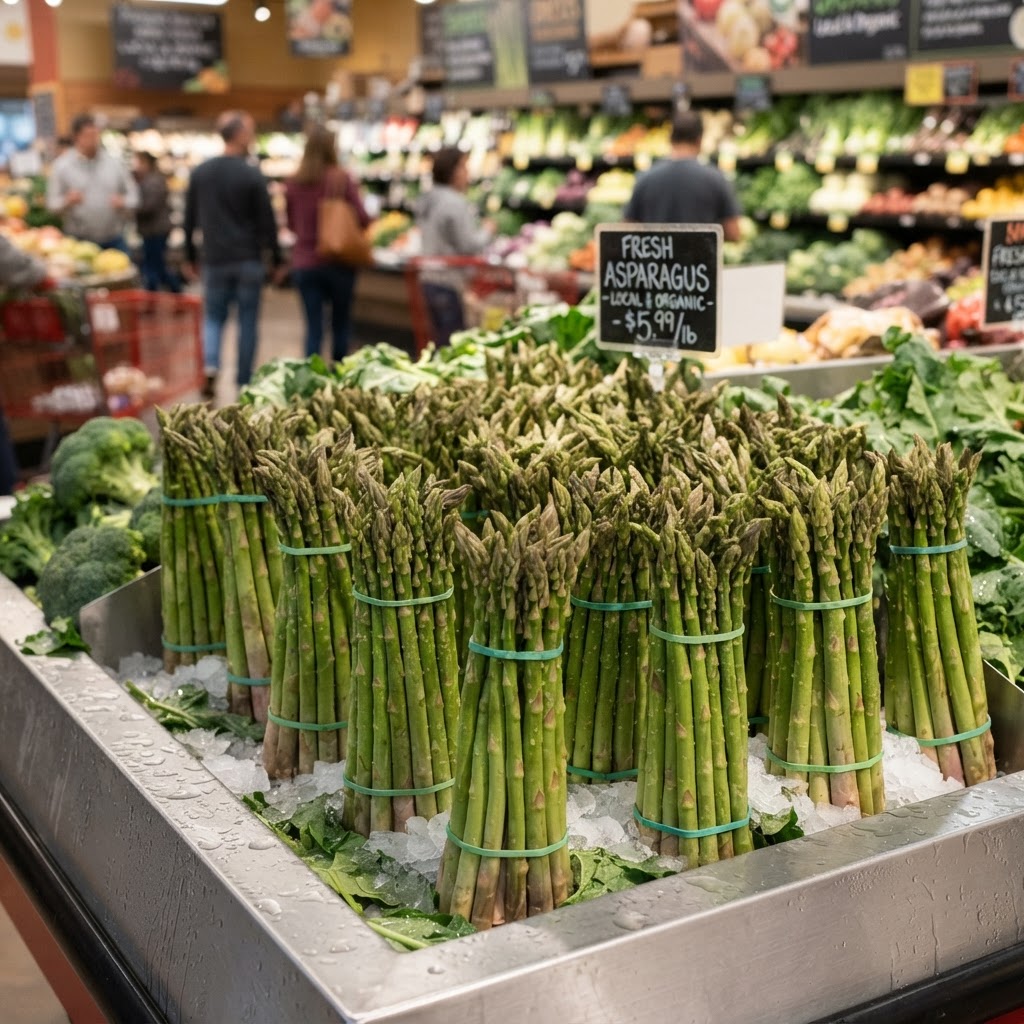
How to Pick the Best One at the Store
Selection Tips
- •Look for firm, bright green spears with tightly closed tips.
- •Avoid stalks that are wilted, limp, or have spread-open tips.
- •The stalks should be smooth and free from blemishes or yellowing.
- •Thicker stalks are often more tender than they appear; thin stalks can be woody.
Recipes Using Asparagus
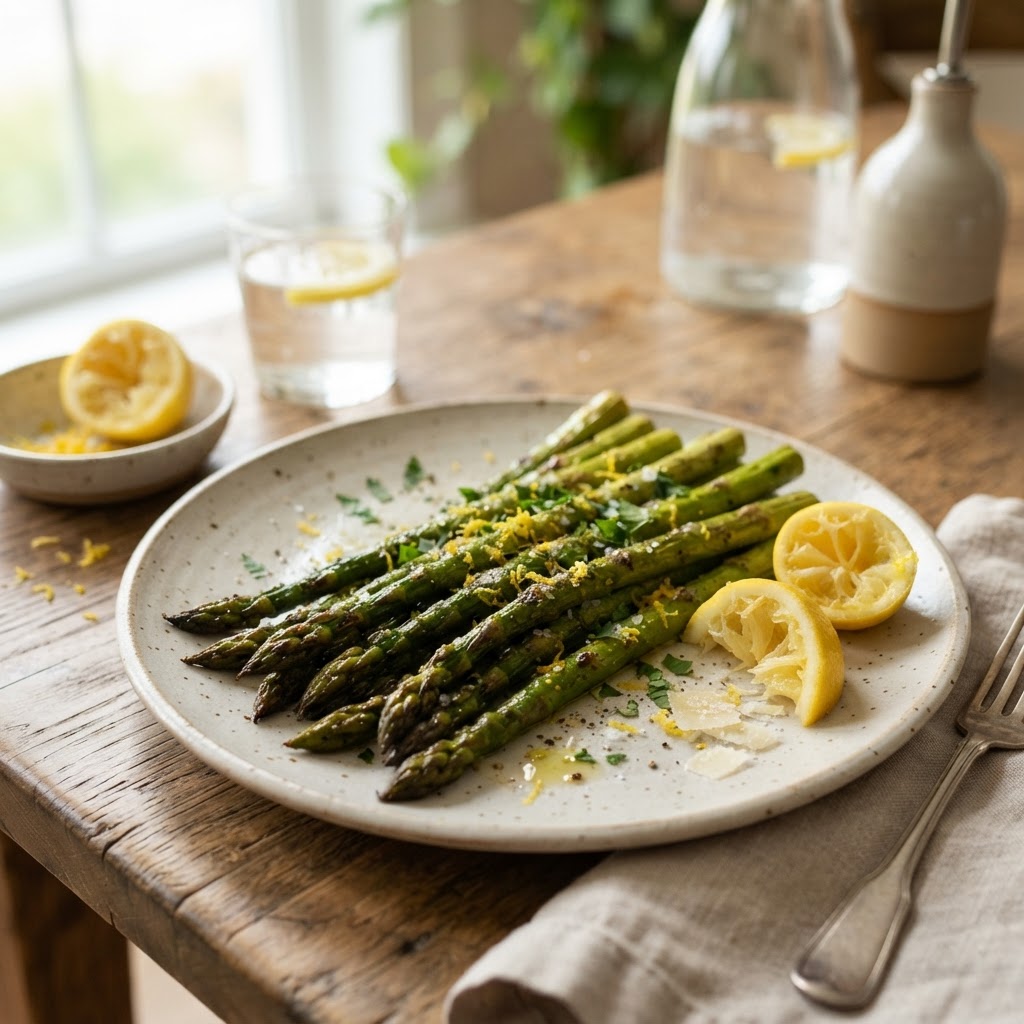
Lemon Roasted Asparagus
A crisp, refreshing side dish packed with essential B vitamins for energy and recovery.
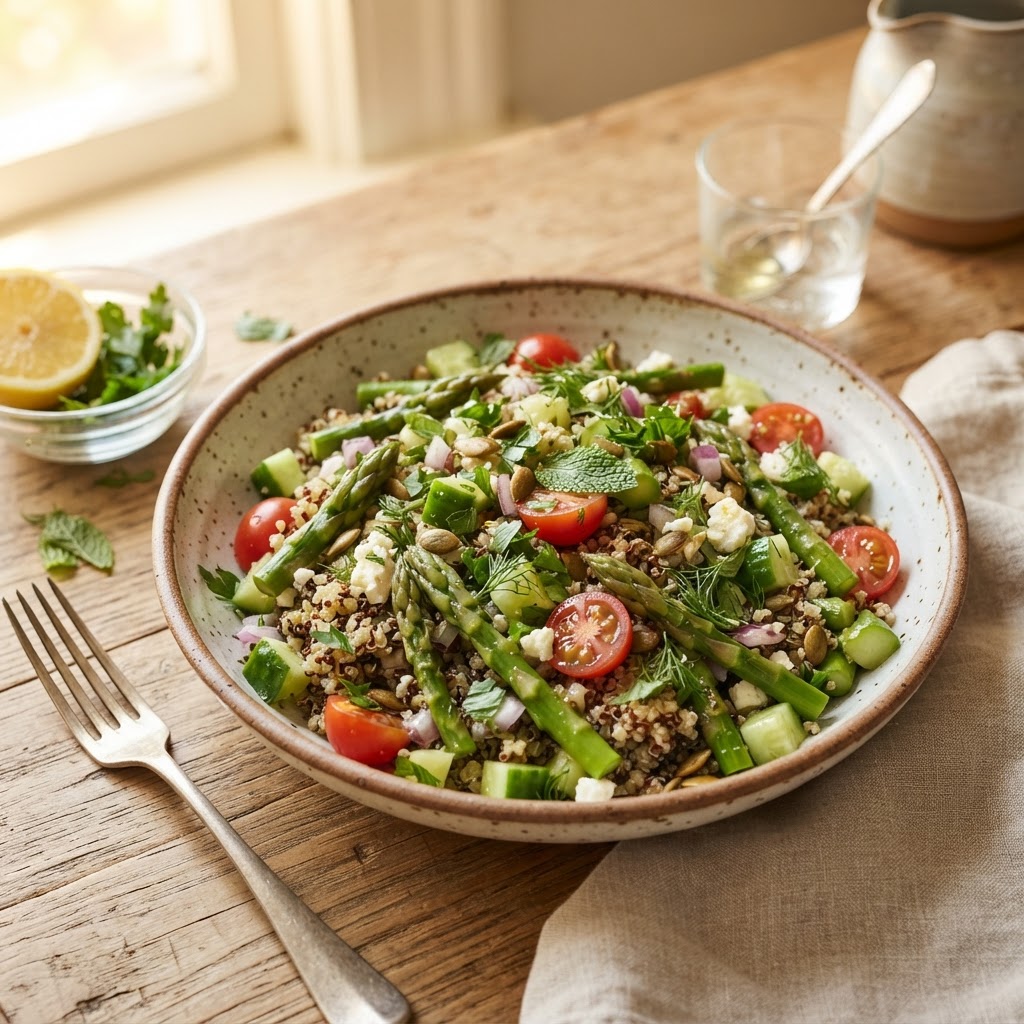
Asparagus Quinoa Salad
A light and fiber-rich meal perfect for lunch prep or as a nutritious dinner side.

Asparagus and Mushroom Frittata
A protein-rich breakfast choice that stabilizes blood sugar throughout the morning.
Frequently Asked Questions
Why does asparagus make my urine smell?
This is due to the asparagusic acid in the vegetable, which is broken down during digestion into sulfur-containing compounds. Not everyone has the genetic ability to produce these compounds or to smell them.
Is it okay to eat the woody ends of asparagus?
The woody ends are tough and fibrous. It's best to snap them off before cooking, as they are not pleasant to eat. The spears themselves are tender and delicious.