Plums
Sweet-tart stone fruit rich in antioxidants.
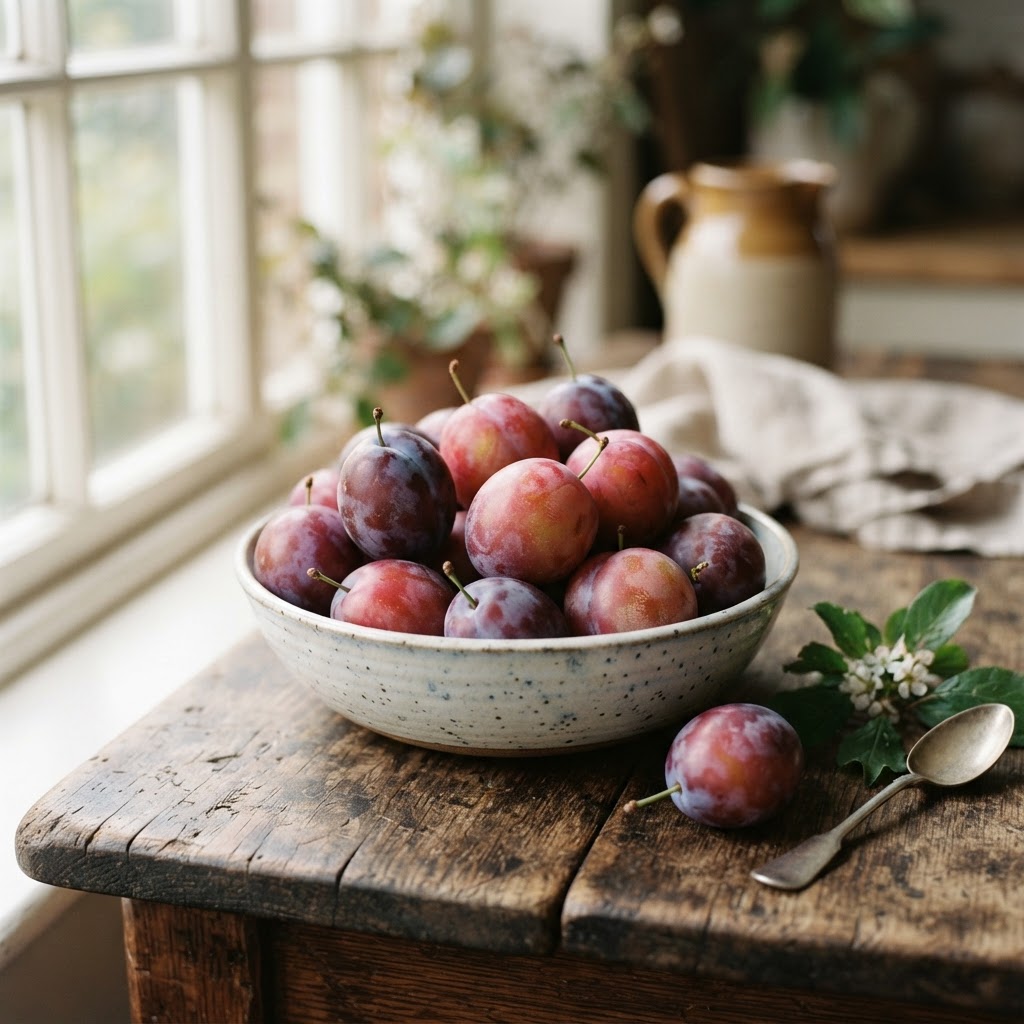
Plums are vibrant, stone-fruit treasures that offer a delightful balance of tart skin and succulent, honey-sweet flesh. Beyond their culinary versatility, these fruits are packed with phytonutrients that support metabolic balance and cognitive longevity, making them a perfect addition to a nourishing recovery diet.
Quick Facts
Nutrition Snapshot
Health Benefits
What the Research Says
Studies suggest that anthocyanin-rich fruits can improve neuroplasticity and blood flow to key brain regions, though more human clinical trials are needed for definitive Alzheimer's prevention claims.
Research consistently demonstrates that the inclusion of whole, fiber-rich fruits like plums does not negatively impact glucose control in individuals with Type 2 Diabetes when consumed in moderation.
How to Cook It
Preparation Tips
- •Roast plums with a touch of balsamic vinegar to caramelize their natural sugars for a sophisticated dessert topping.
- •Poach slices in herbal tea like hibiscus to infuse the fruit with additional antioxidants without adding refined sugar.
- •Grill plum halves briefly to enhance their sweetness, creating a perfect base for savory grain bowls or lean protein pairings.
Flavor Pairings
- •Walnuts
- •Fresh Ginger
- •Cinnamon
- •Goat Cheese
Storage Tips
- •Leave firm plums at room temperature in a paper bag to accelerate the ripening process.
- •Once soft to the touch, move plums to the refrigerator crisper drawer to extend their shelf life by up to a week.
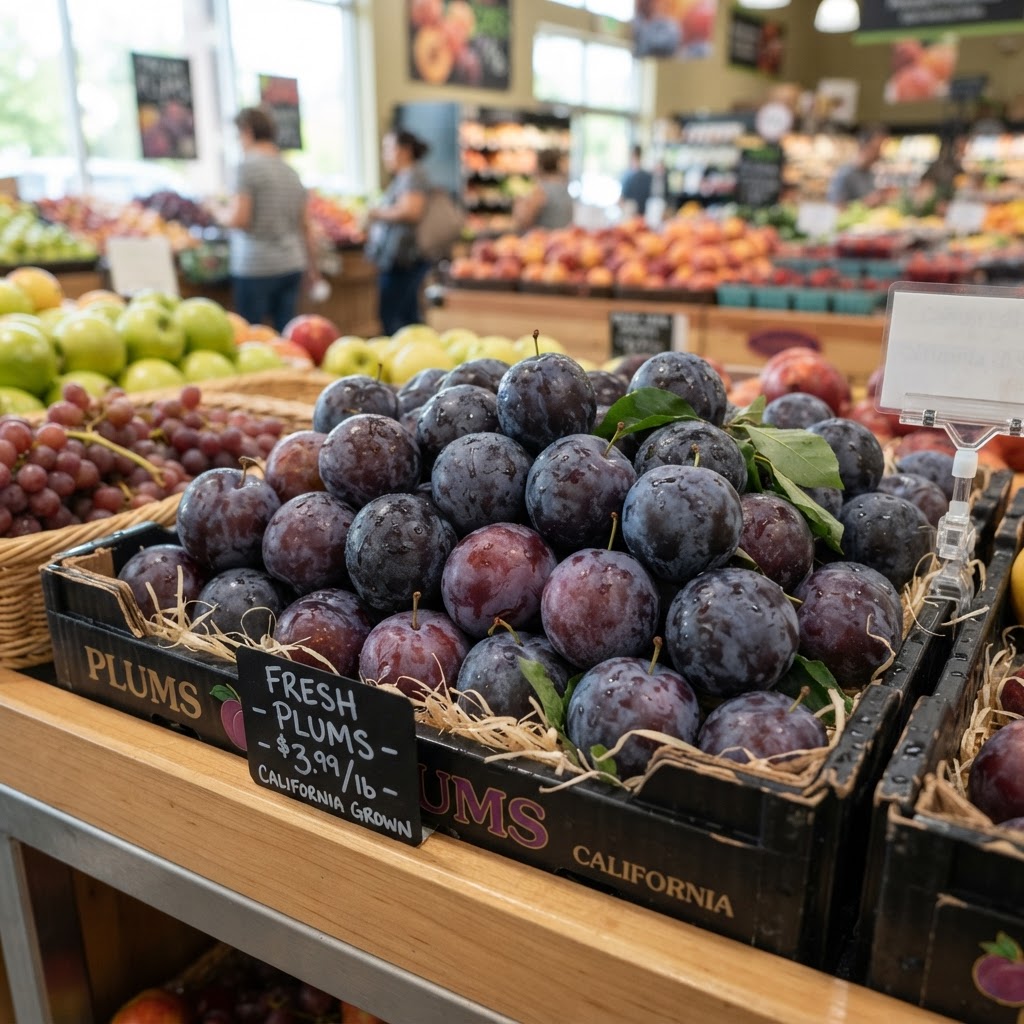
How to Pick the Best One at the Store
Selection Tips
- •Look for fruit that feels slightly soft at the stem end, which indicates proper ripeness.
- •Avoid plums with wrinkled skins, which often signals dehydration and a lack of juiciness.
- •Check for a uniform color throughout; avoid fruit with greenish tinges unless you plan to let them ripen further.
- •Ensure the skin is free of deep bruises, soft spots, or punctures that could lead to quick decay.
Recipes Using Plums
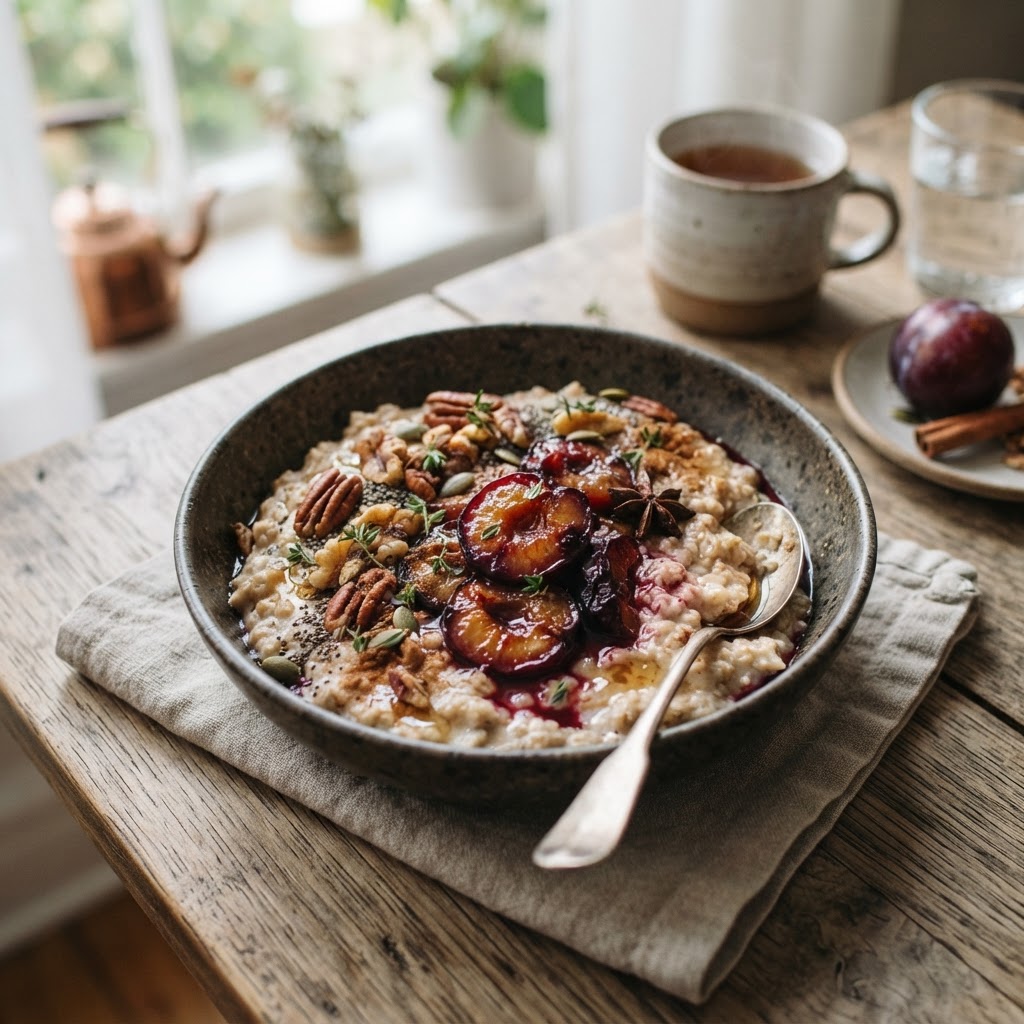
Spiced Plum and Oat Bowl
A warm and fiber-rich breakfast designed to stabilize energy and mood.
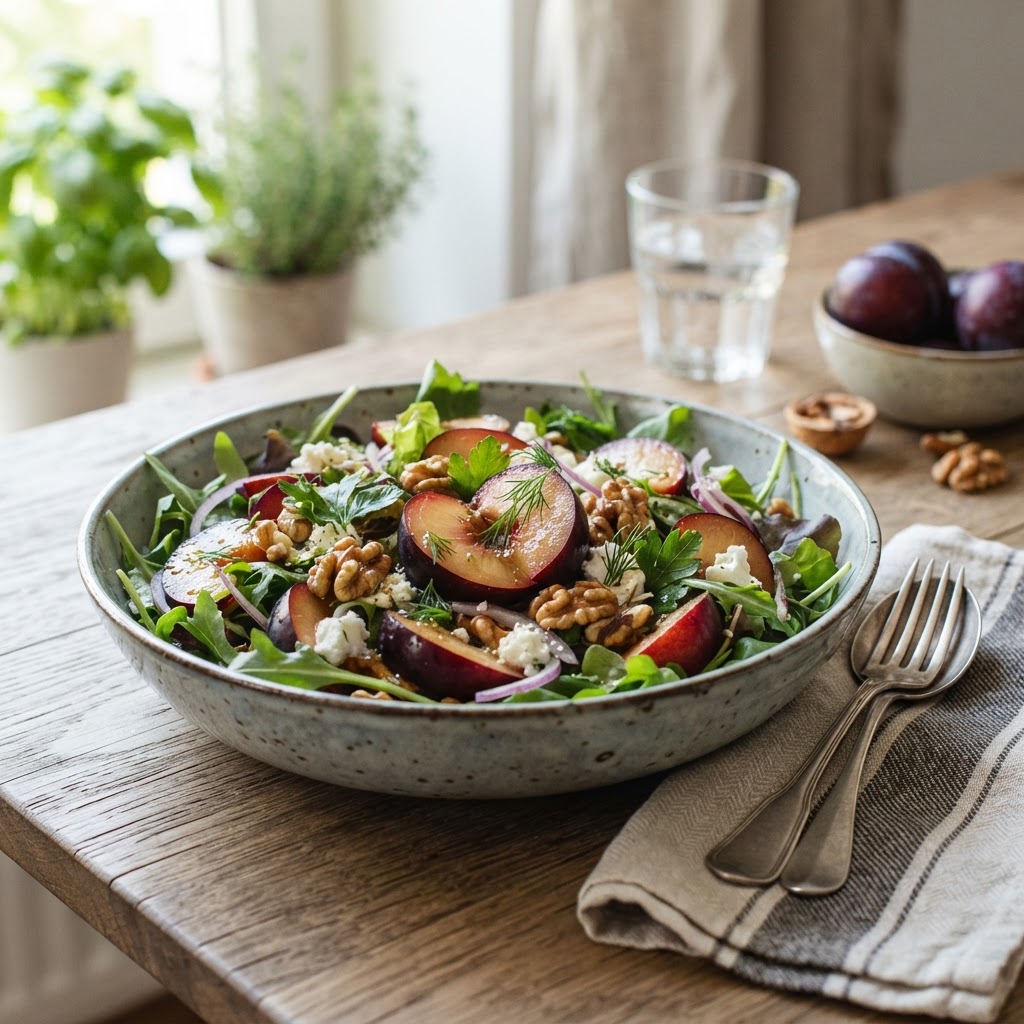
Plum and Walnut Salad
An elegant salad that combines antioxidant-rich plums with omega-3-rich walnuts.
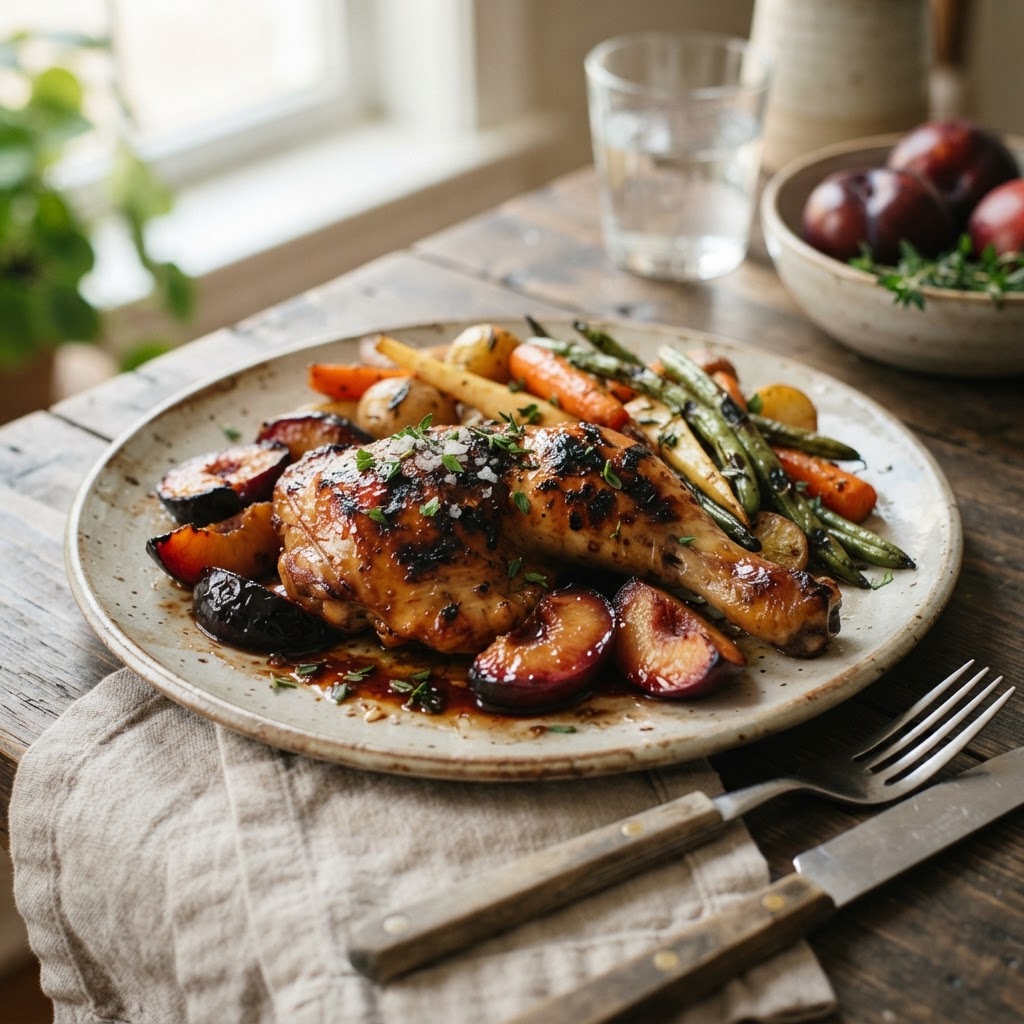
Grilled Plum Chicken
A savory-sweet chicken dish using seasonal plums to create a flavorful glaze.
Frequently Asked Questions
Can I eat plums if I am managing Type 2 Diabetes?
Yes, in moderation. Plums are a low-glycemic fruit, and their fiber content helps mitigate blood sugar spikes compared to processed snacks.
Do plums help with brain health?
The anthocyanins in plums are powerful antioxidants that protect the brain from oxidative stress, which is a key factor in long-term neurological health.