Pineapple
Tropical fruit containing bromelain, a digestive enzyme.

Pineapple is a vibrant, sun-kissed tropical treasure that brings both a refreshing burst of sweetness and powerful bioactive compounds to your table. Known for its distinct golden flesh and prickly exterior, this fruit serves as more than just a culinary highlight—it is a nutrient-dense powerhouse that supports systemic health and nervous system vitality.
Quick Facts
Nutrition Snapshot
Health Benefits
What the Research Says
Clinical studies suggest that supplemental bromelain can reduce markers of inflammation and muscle soreness following intense physical exertion.
While pineapple has a moderate glycemic index, some emerging research looks at how its fiber content helps buffer glucose absorption, though it should still be consumed in moderation by those managing blood sugar.
How to Cook It
Preparation Tips
- •Grill pineapple rings over high heat to caramelize the natural sugars for a sophisticated dessert.
- •Incorporate fresh pineapple into your post-workout smoothies to leverage its anti-inflammatory properties.
- •Use raw pineapple as a base for salsas to pair with lean proteins like fish or chicken.
Flavor Pairings
- •Coconut
- •Fresh Cilantro
- •Chili Powder
- •Mint
Storage Tips
- •Keep uncut pineapples at room temperature to maintain peak flavor and juiciness.
- •Once sliced, store in an airtight glass container in the refrigerator to prevent flavor absorption from other foods.
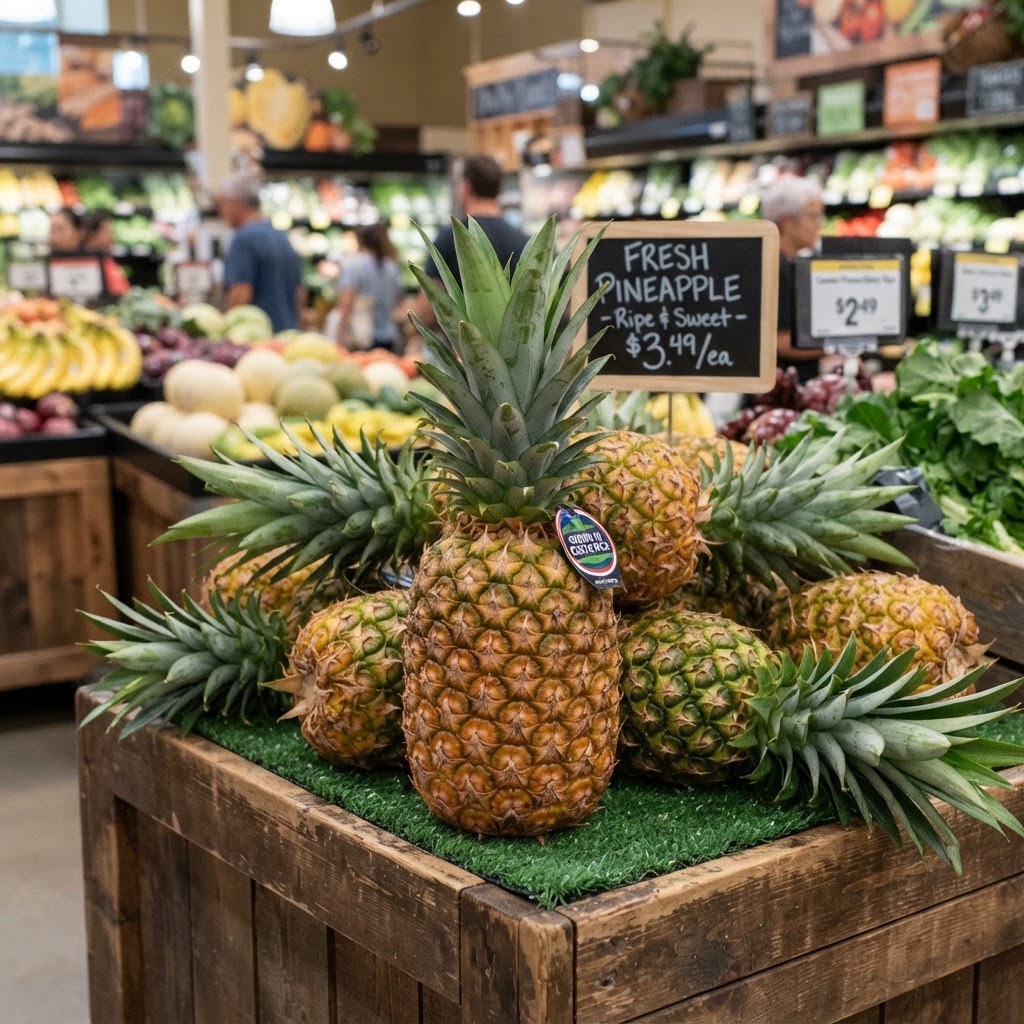
How to Pick the Best One at the Store
Selection Tips
- •Look for a pineapple with a golden-yellow hue near the base, which indicates maturity.
- •Gently tug on one of the inner leaves at the crown; if it pulls out easily, the fruit is ripe.
- •Press the skin gently; it should have a slight 'give' without feeling mushy.
- •Sniff the base; a sweet, fragrant aroma is the hallmark of a perfectly ripe fruit.
Recipes Using Pineapple
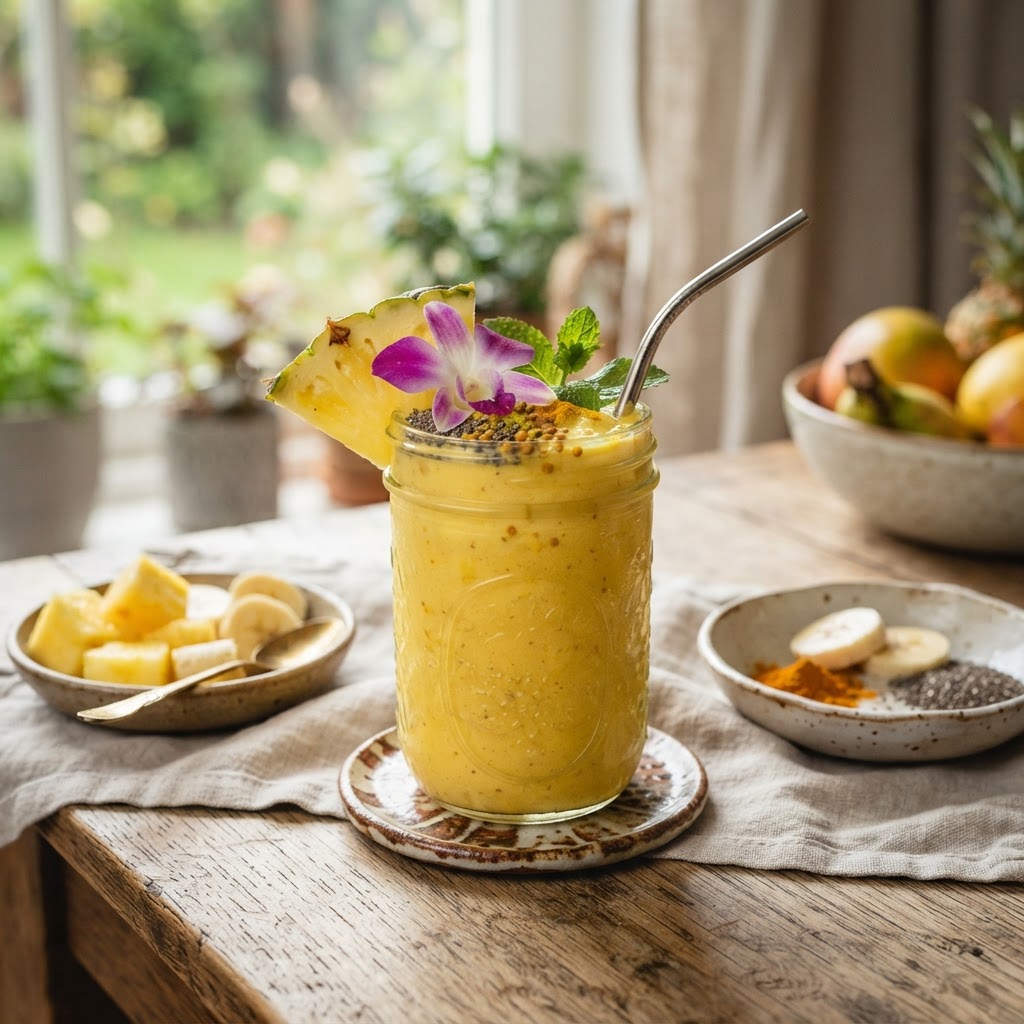
Tropical Pineapple Turmeric Smoothie
Anti-inflammatory ingredients combine to help calm the body and mind.

Grilled Pineapple Chicken Skewers
Lean protein meets fruit enzymes for a healthy, recovery-fueling dinner.

Pineapple Ginger Digestive Slaw
A fiber-rich side dish that aids digestion and boosts immunity.
Frequently Asked Questions
Can I eat pineapple if I am monitoring my blood sugar?
Yes, but portion control is essential. Pair it with a source of protein or healthy fat to help slow the absorption of fruit sugars into the bloodstream.
Why does my mouth tingle when I eat pineapple?
This is due to bromelain, the active enzyme that is literally beginning to digest the proteins in your mouth. It is perfectly harmless and a sign of high enzyme content.