Leeks
Mild, sweet allium vegetable great in soups and sautés.
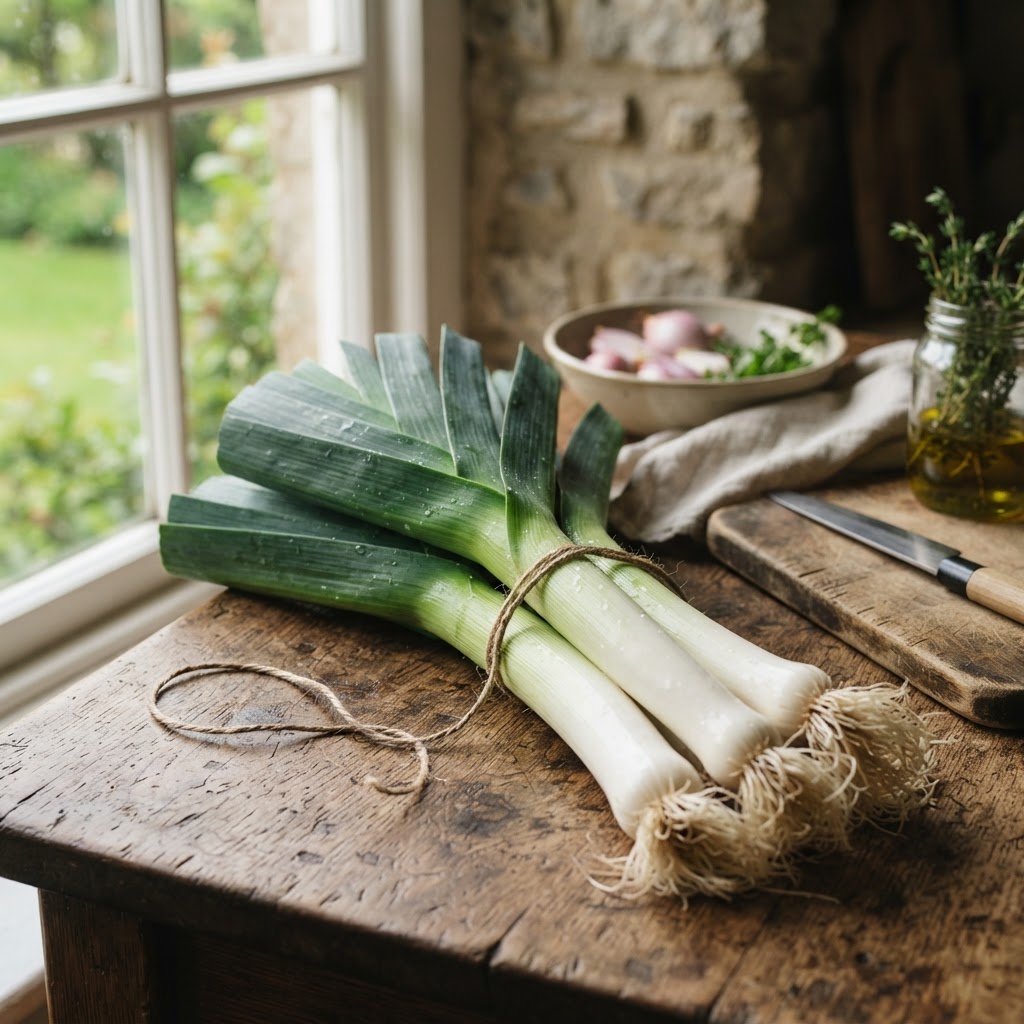
Leeks are the sophisticated, milder cousin of the onion, offering a delicate, sweet flavor that transforms into a buttery, melt-in-your-mouth texture when cooked. A staple of culinary arts, these elegant alliums are as beneficial for your nervous system and blood sugar stability as they are delicious in soups, gratins, and sautés.
Quick Facts
Nutrition Snapshot
Health Benefits
What the Research Says
Studies suggest that inulin-type fructans found in alliums like leeks can modulate gut hormones, potentially improving glycemic control in individuals with metabolic challenges.
Large-scale epidemiological studies indicate that consistent intake of dietary flavonoids, such as those found in leeks, is associated with a slower rate of age-related cognitive decline.
How to Cook It
Preparation Tips
- •Always slice leeks lengthwise and rinse thoroughly under running water to remove hidden grit between the layers.
- •Use only the white and light green parts for a delicate texture; save the dark green tops to flavor stocks and bone broths.
- •Sauté leeks in a small amount of avocado oil or ghee over medium-low heat to draw out their natural sweetness without browning too quickly.
Flavor Pairings
- •Fresh thyme
- •Goat cheese
- •Lemon zest
- •Dijon mustard
Storage Tips
- •Do not wash leeks before storing, as moisture promotes decay; keep them in a perforated plastic bag in your crisper drawer.
- •If you have already sliced them, place the pieces in an airtight container and use within 2 to 3 days.
How to Pick the Best One at the Store
Selection Tips
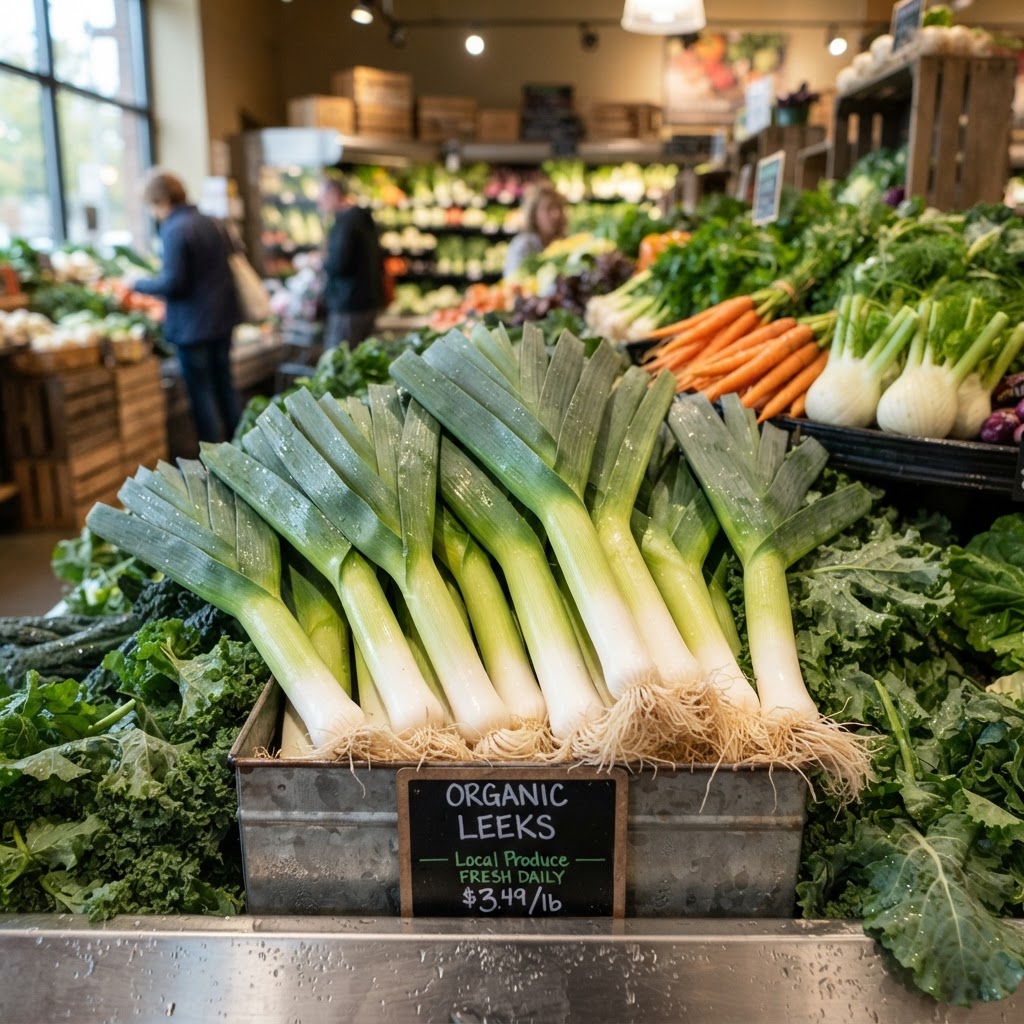
- •Choose leeks with firm, straight white stalks and vibrant, crisp green leaves.
- •Avoid stalks that look yellowed, bruised, or show signs of slime at the root end.
- •Look for leeks that feel heavy for their size, which indicates optimal moisture content.
- •Select thinner, smaller leeks for a more tender bite and larger ones if you are using them primarily for soups or slow-braising.
Recipes Using Leeks

Potato and Leek Soup
A classic, soothing soup that is gentle on the stomach and deeply nourishing.
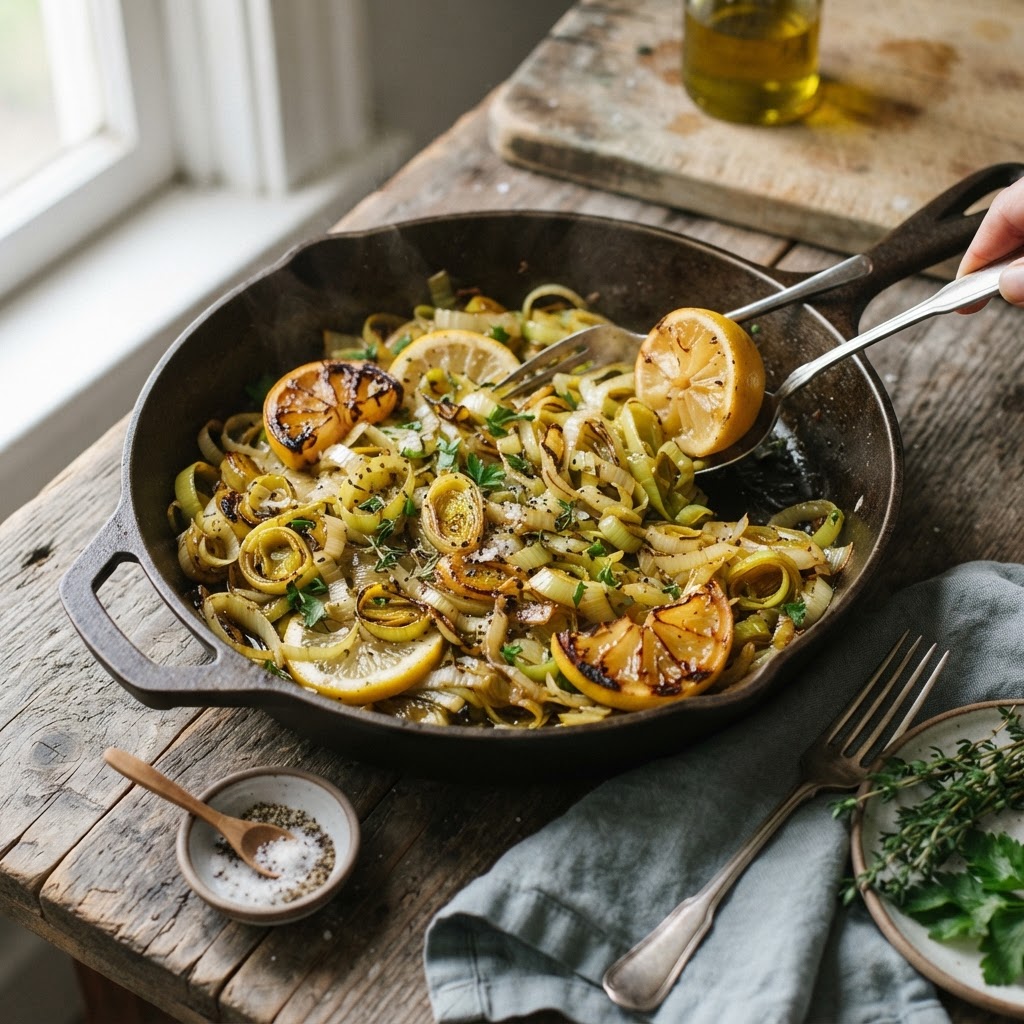
Sautéed Leeks with Lemon
A bright, simple side dish that makes leeks the highlight of the meal.

Leek and Mushroom Stir-Fry
An earthy and satisfying stir-fry packed with fiber to support digestive health.
Frequently Asked Questions
Can I eat the dark green tops of the leeks?
Yes, they are edible but quite fibrous and tough. They are best reserved for flavoring stocks, broths, or soups where they can be strained out or simmered until very soft.
Are leeks better than onions for blood sugar control?
Both are excellent choices. Leeks specifically offer a higher concentration of prebiotic inulin fiber compared to standard onions, which is particularly beneficial for gut health and metabolic stability.