Kale
Hearty leafy green loaded with vitamins A, C, and K.
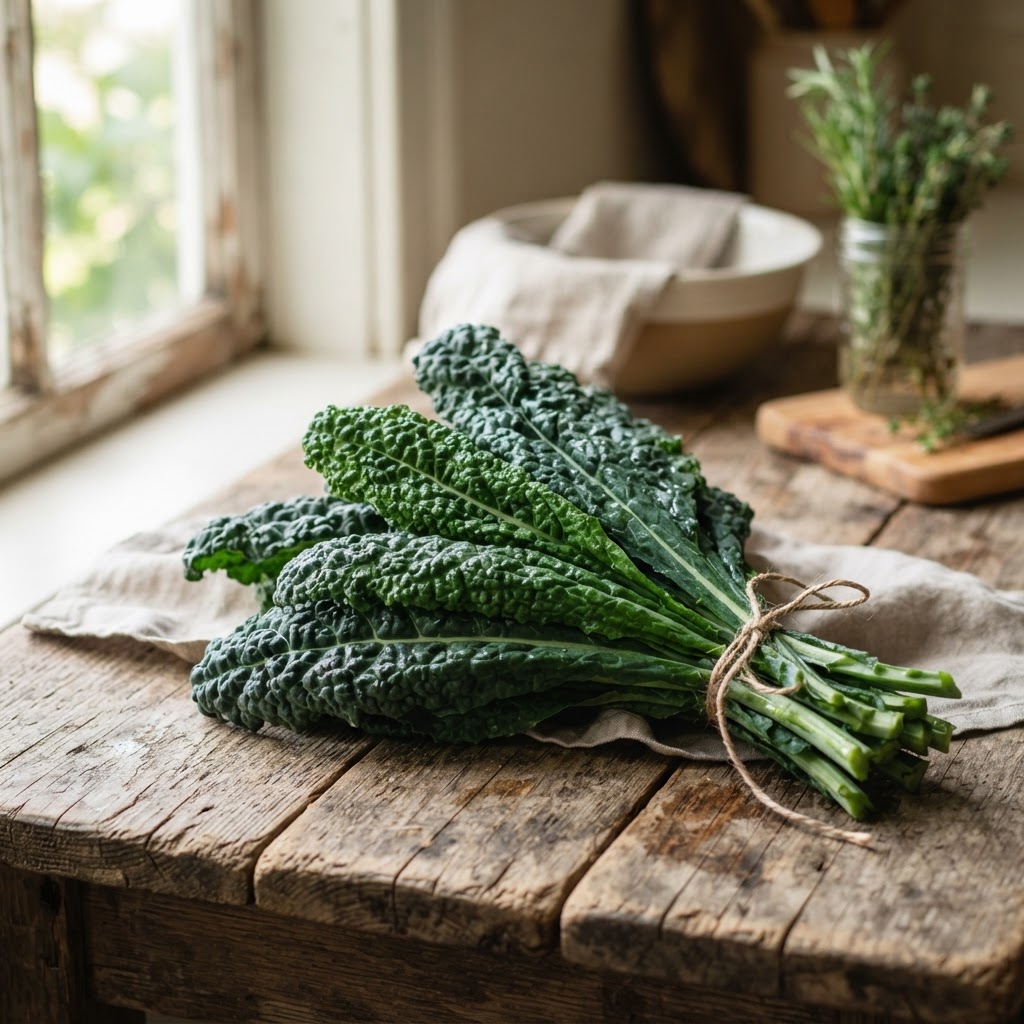
Kale is a nutritional powerhouse from the brassica family, celebrated for its robust, earthy flavor and remarkable versatility in the kitchen. Whether massaged into a vibrant salad or sautéed to tender perfection, this nutrient-dense green serves as an essential foundation for long-term health and vitality.

Quick Facts
Nutrition Snapshot
Health Benefits
What the Research Says
Studies suggest that increasing the intake of leafy greens like kale is inversely associated with the risk of developing Type 2 diabetes.
Observational research indicates that participants who consumed at least one serving of leafy greens daily experienced slower cognitive decline compared to those who did not.
How to Cook It
Preparation Tips
- •Massage raw kale with lemon juice or olive oil for 5 minutes to break down tough fibers.
- •Remove the thick, woody stems before sautéing to ensure an even, pleasant texture.
- •Roast kale leaves at 300°F with a light drizzle of oil to create healthy, crispy chips.
Flavor Pairings
- •Lemon and zest
- •Toasted walnuts
- •Garlic and red pepper flakes
- •Sweet dried cranberries
Storage Tips
- •Do not wash kale until you are ready to use it, as moisture promotes premature wilting.
- •Keep leaves in an airtight container or breathable produce bag to maintain crispness for up to a week.
How to Pick the Best One at the Store
Selection Tips
- •Look for leaves that are dark green and firm, avoiding any that show signs of yellowing.
- •Ensure the stems are sturdy and not limp or shriveled.
- •Check for holes or brown spots, which can indicate insect damage or improper storage.
- •The leaves should feel slightly crisp to the touch, not slimy or damp.
Recipes Using Kale

Massaged Kale & Lemon Salad
Kale is broken down with acid to aid digestion and nutrient absorption.

Crispy Kale Chips
A savory, crunchy snack replacement for processed foods.

Kale & White Bean Soup
Fiber-rich soup to stabilize blood sugar and mood.
Frequently Asked Questions
Is raw kale difficult to digest?
Yes, for some people, raw kale can be tough on the digestive system. Massaging the leaves or lightly steaming them can significantly improve digestibility.
Can kale help with cravings?
Its high fiber content promotes satiety, which can help stabilize blood sugar and reduce the erratic hunger signals often triggered by sugar or refined carb cravings.