Fennel
Crisp vegetable with a mild licorice flavor and fiber.
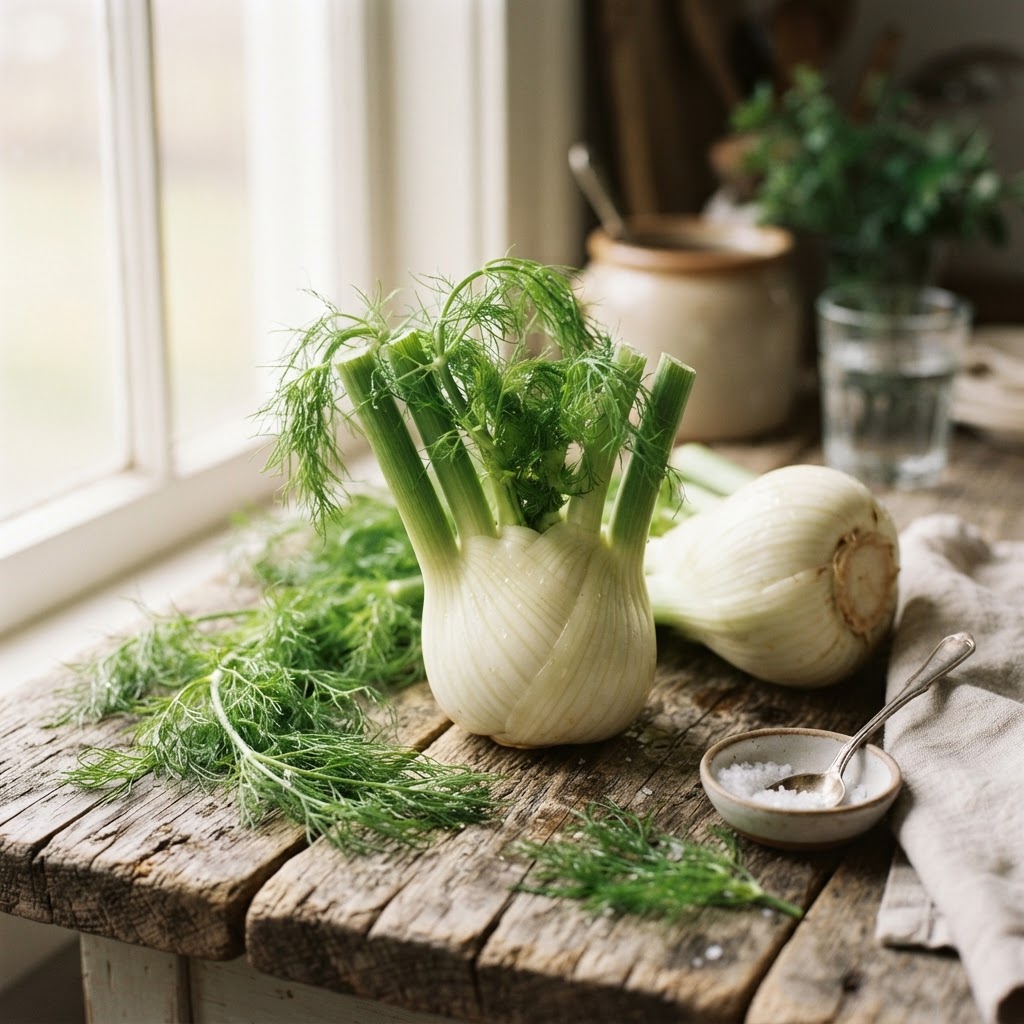
Fennel is a crisp, aromatic vegetable known for its elegant, bulbous base and feathery, dill-like fronds. With a refreshing hint of mild anise or licorice, this versatile plant adds a sophisticated depth to both raw salads and slow-cooked Mediterranean dishes, making it a stellar addition to any health-conscious kitchen.
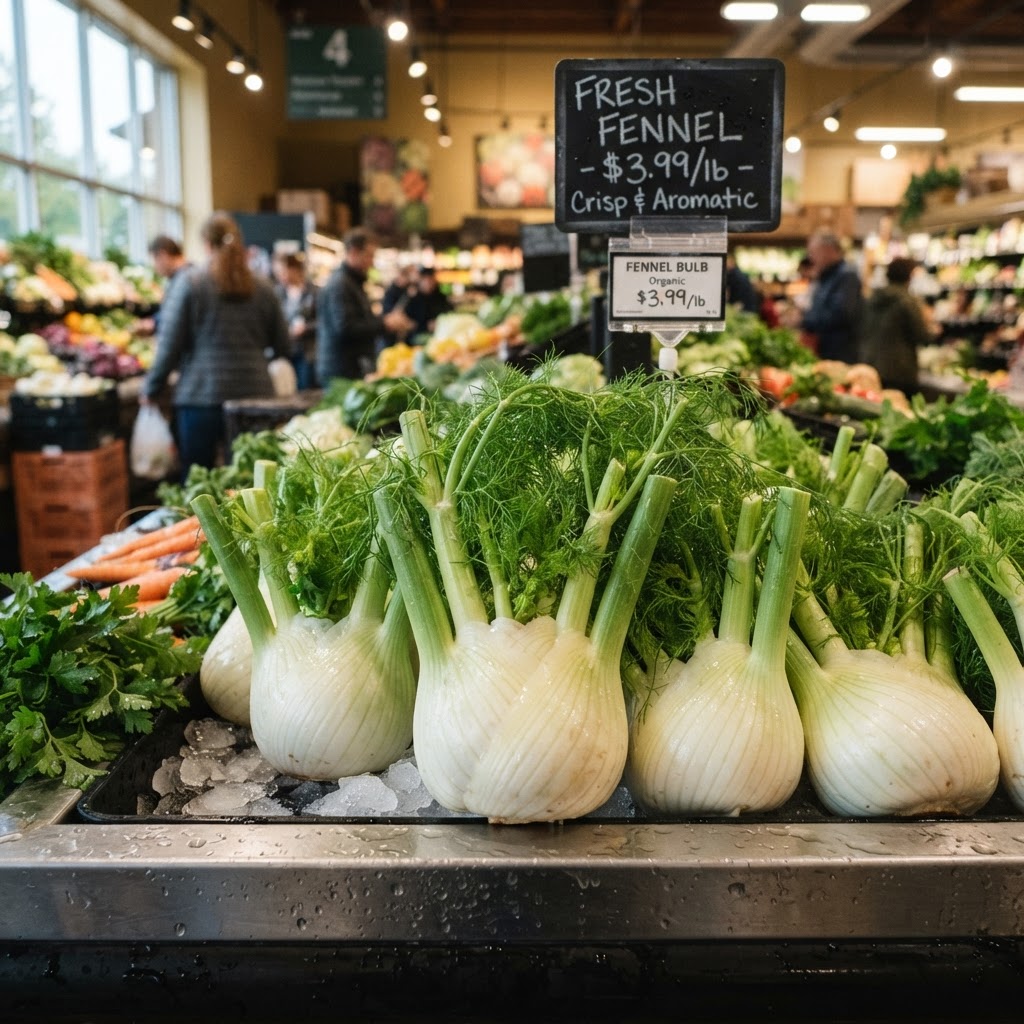
Quick Facts
Nutrition Snapshot
Health Benefits
What the Research Says
Studies suggest that fennel seed extracts may help lower blood sugar levels and improve markers of metabolic health, though more human clinical trials on the vegetable bulb specifically are needed.
Preliminary research indicates that the concentrated compounds in fennel demonstrate anti-inflammatory effects which may support systemic nervous system health, though data is currently limited to animal and in-vitro models.
How to Cook It
Preparation Tips
- •Shave the bulb paper-thin using a mandoline for a crisp, refreshing raw salad base.
- •Do not discard the green fronds; use them as a delicate, aromatic herb garnish for soups or fish.
- •Roast fennel wedges with olive oil and a squeeze of lemon to mellow the licorice flavor into a sweet, caramelized finish.
Flavor Pairings
- •Citrus fruits like blood orange or grapefruit
- •Fresh fish and white-fleshed seafood
- •Apples and crisp pears
- •Toasted walnuts and hazelnuts
Storage Tips
- •Cut the stalks off the bulb if they are very long to save fridge space, but keep them attached to the bulb if you plan to use them within a day or two.
- •Keep the bulb in a perforated plastic bag or wrapped loosely in a damp paper towel to maintain humidity.
- •Use the feathery fronds quickly, as they wilt faster than the sturdy base.
How to Pick the Best One at the Store
Selection Tips
- •Choose bulbs that are firm, white, and feel heavy for their size.
- •Ensure the surface is free of cracks, bruises, or dark brown spots.
- •Look for bright green, vibrant fronds that show no signs of wilting or yellowing.
- •Avoid bulbs that appear split at the base, as this can indicate the plant is past its prime.
Recipes Using Fennel
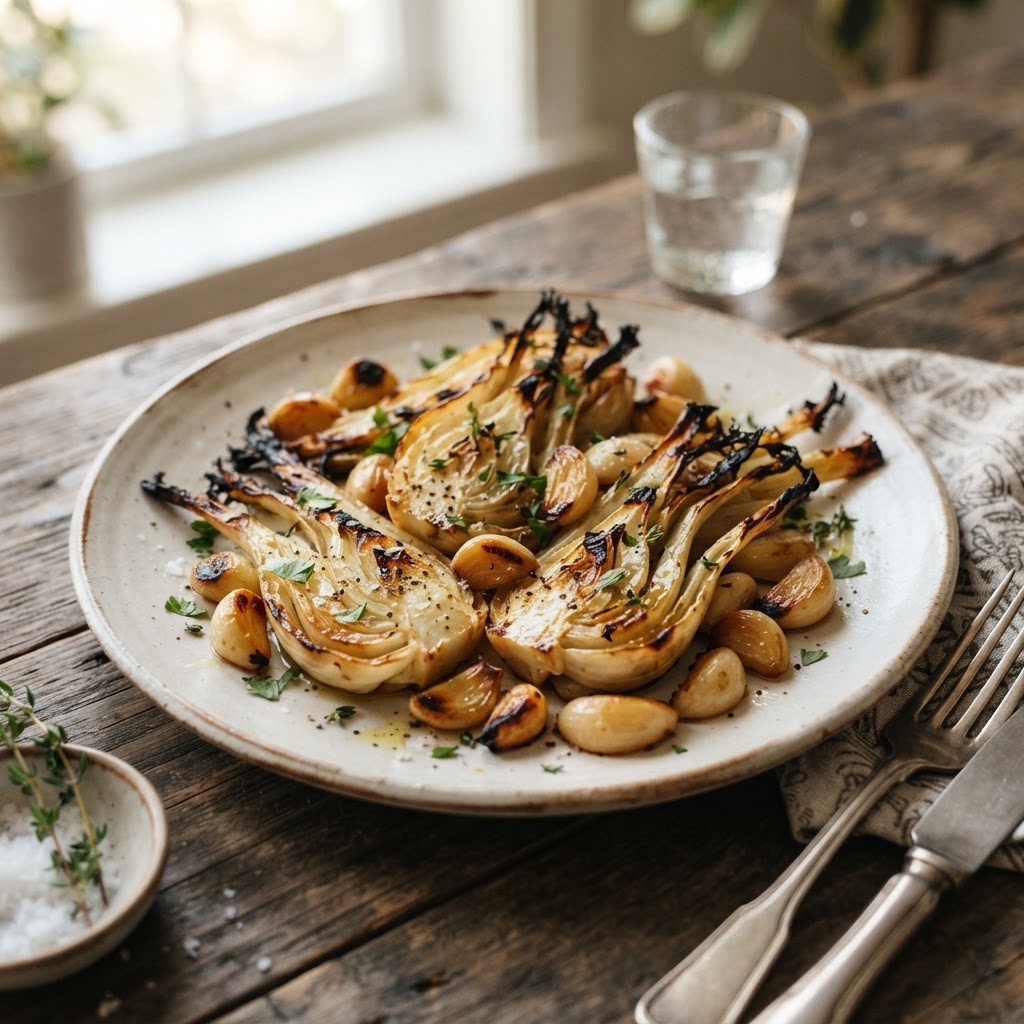
Roasted Fennel with Garlic
Fennel becomes beautifully sweet and tender when roasted, perfect for digestion and steady energy.
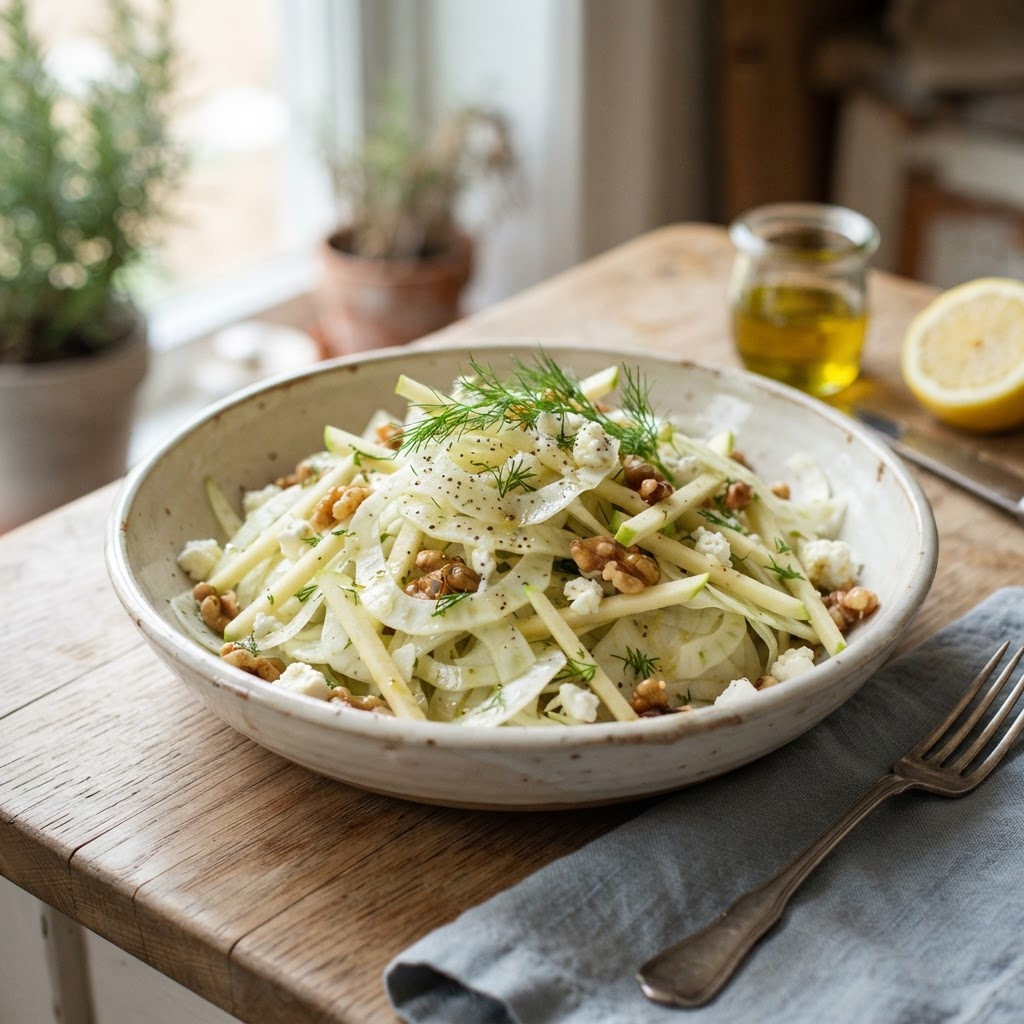
Shaved Fennel and Apple Salad
This crisp salad is perfect for refreshing the palate and providing a dose of antioxidants.
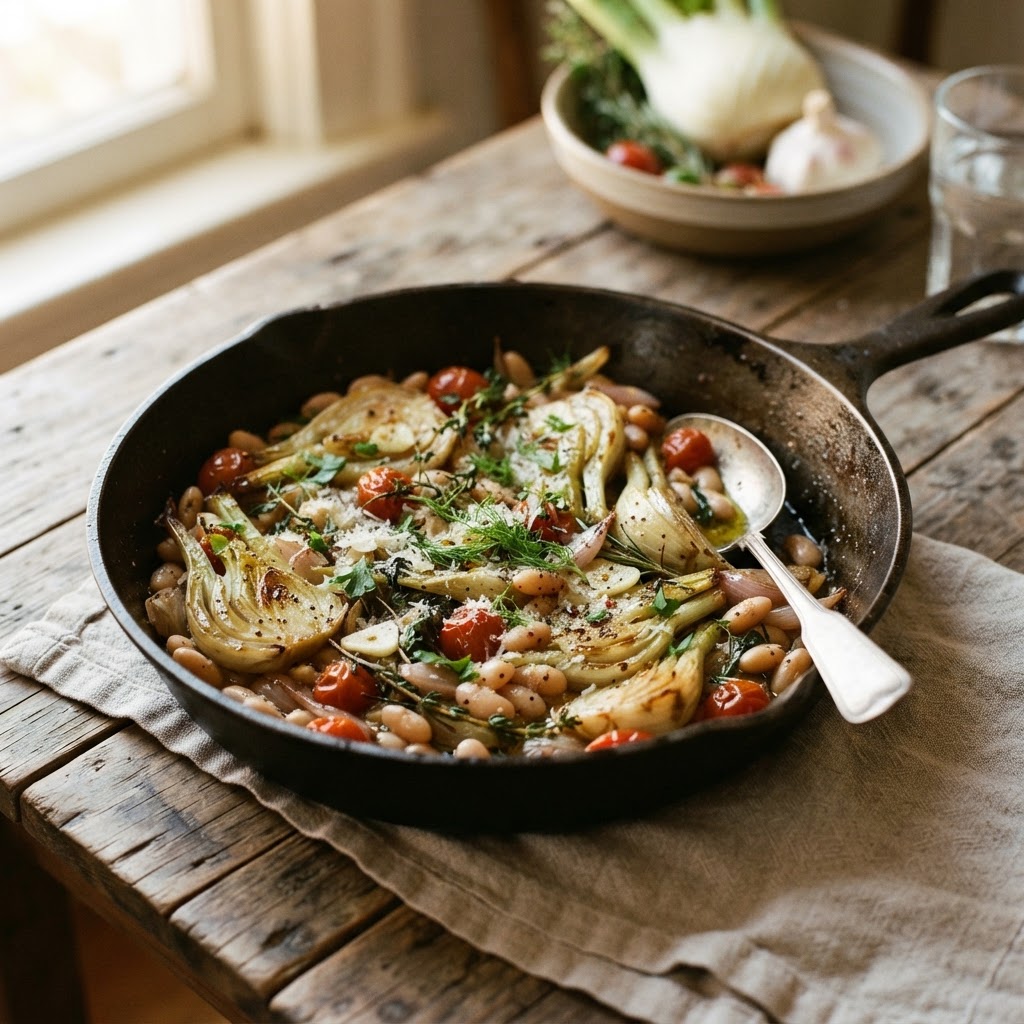
Fennel and White Bean Sauté
A balanced, fiber-rich meal that keeps hunger satisfied while supporting steady mood regulation.
Frequently Asked Questions
Is the entire fennel plant edible?
Yes, from the crunchy white base to the stalks and the delicate feathery fronds, every part of the fennel plant can be used in cooking.
Does cooking fennel remove the licorice flavor?
Yes, cooking fennel mellows the anise flavor significantly, turning it into a subtle, sweet, and nutty profile that is much milder than the raw vegetable.