Cantaloupe
Sweet melon high in vitamin A and hydration.
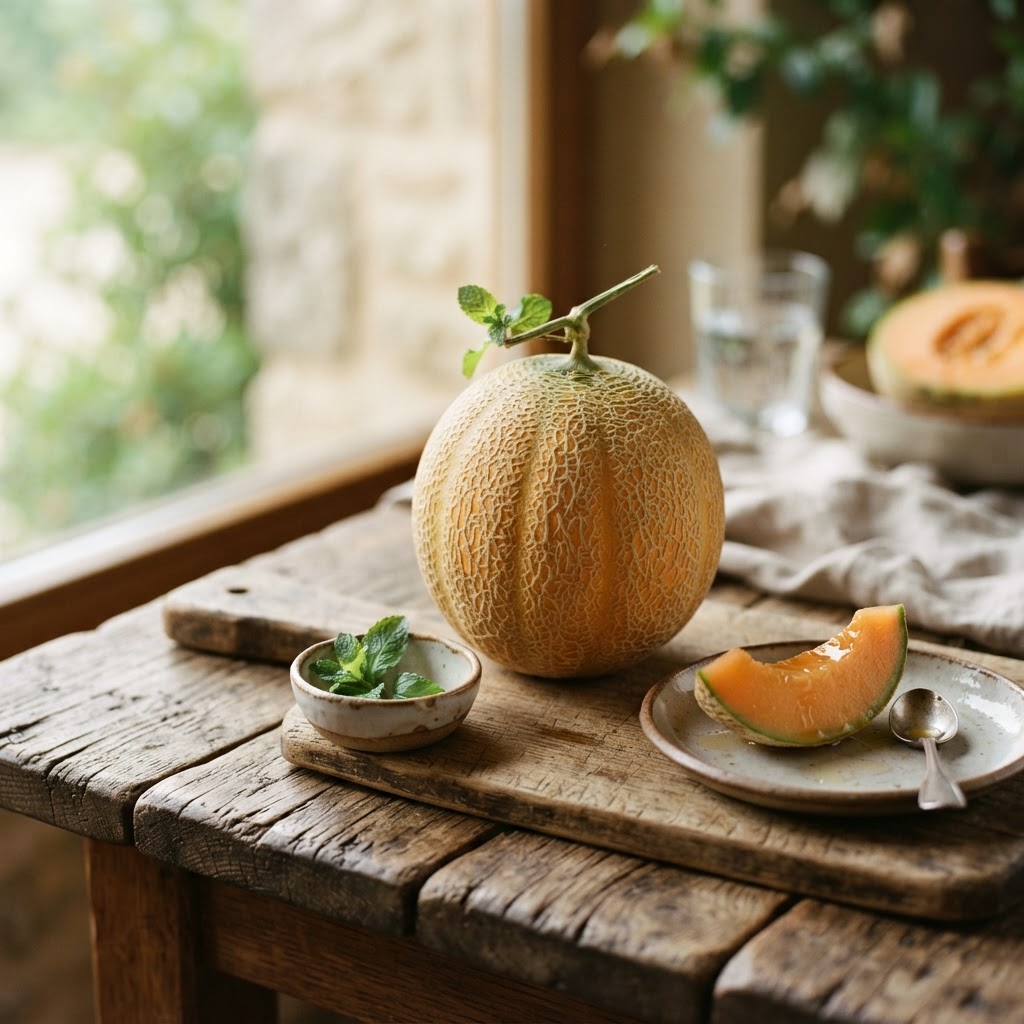
Cantaloupe is a refreshing, nutrient-dense melon cherished for its vibrant orange flesh and honey-sweet aroma. Beyond its ability to hydrate and satisfy, this fruit serves as a powerful ally in supporting metabolic health and nervous system resilience, making it a standout choice for mindful eaters.
Quick Facts
Nutrition Snapshot
Health Benefits
What the Research Says
Studies suggest that diets rich in carotenoids, like those found in cantaloupe, are associated with a slower rate of cognitive decline in aging populations.
While cantaloupe has a moderate glycemic index, clinical research indicates that portion-controlled intake does not lead to significant spikes in blood sugar when paired with proteins or healthy fats.
How to Cook It
Preparation Tips
- •Grill thick slices for 2 minutes per side to caramelize natural sugars for a smoky dessert.
- •Blend with fresh mint and lime juice for a cooling, hydrating summer gazpacho.
- •Use frozen chunks as a nutrient-dense base for creamy morning fruit smoothies.
Flavor Pairings
- •Prosciutto or salty cured meats
- •Fresh mint and basil
- •Feta or creamy goat cheese
- •Lime juice and chili powder
Storage Tips
- •Keep uncut cantaloupe at room temperature to enhance flavor intensity.
- •Once cut, store in a sealed container in the refrigerator to prevent it from absorbing odors from other foods.
- •Eat cut melon within 3 days for the best texture and nutrient quality.
How to Pick the Best One at the Store
Selection Tips
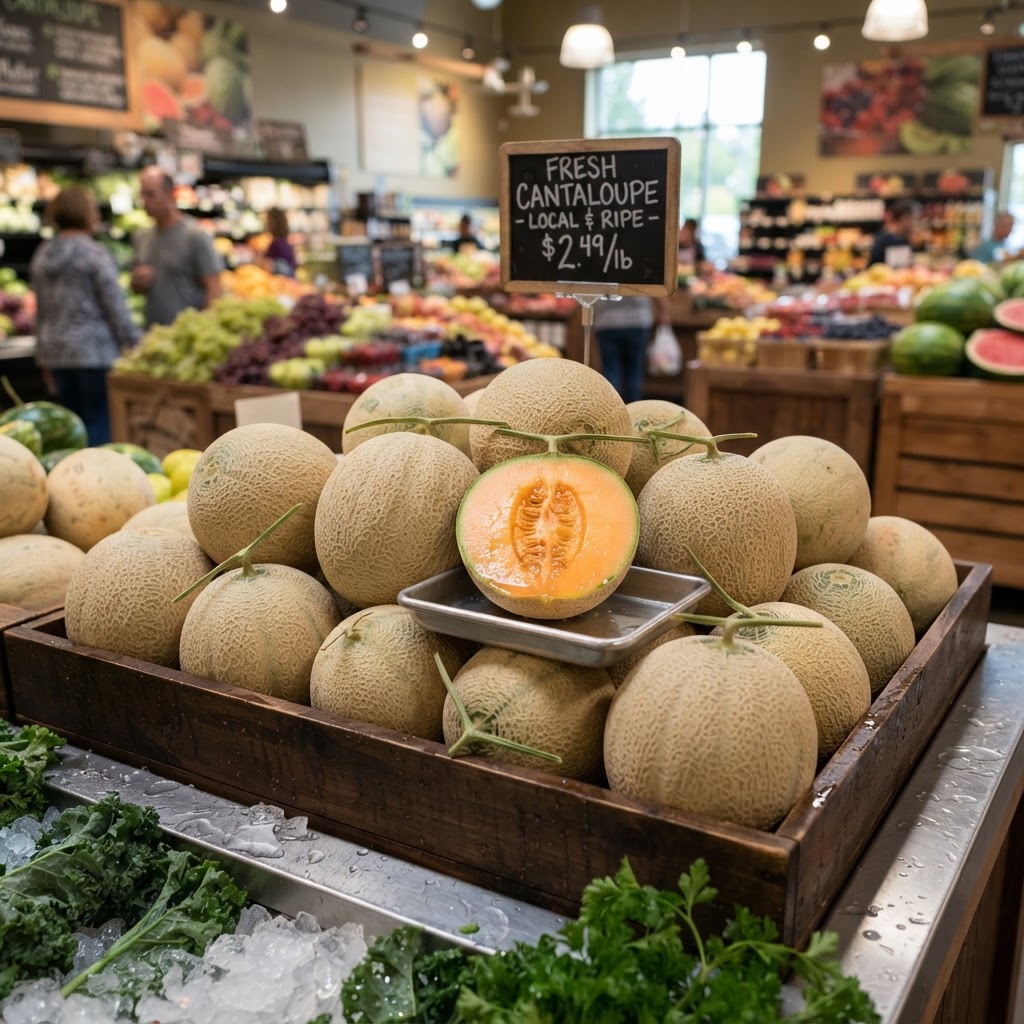
- •Look for a firm stem end with no remaining green, indicating it was harvested at peak ripeness.
- •The rind should have a creamy, golden-tan color rather than a green or gray hue.
- •Press the blossom end (opposite the stem); it should yield slightly to gentle pressure.
- •Check for a sweet, pleasant aroma at the stem end; if it smells overly fermented, it is likely overripe.
Recipes Using Cantaloupe
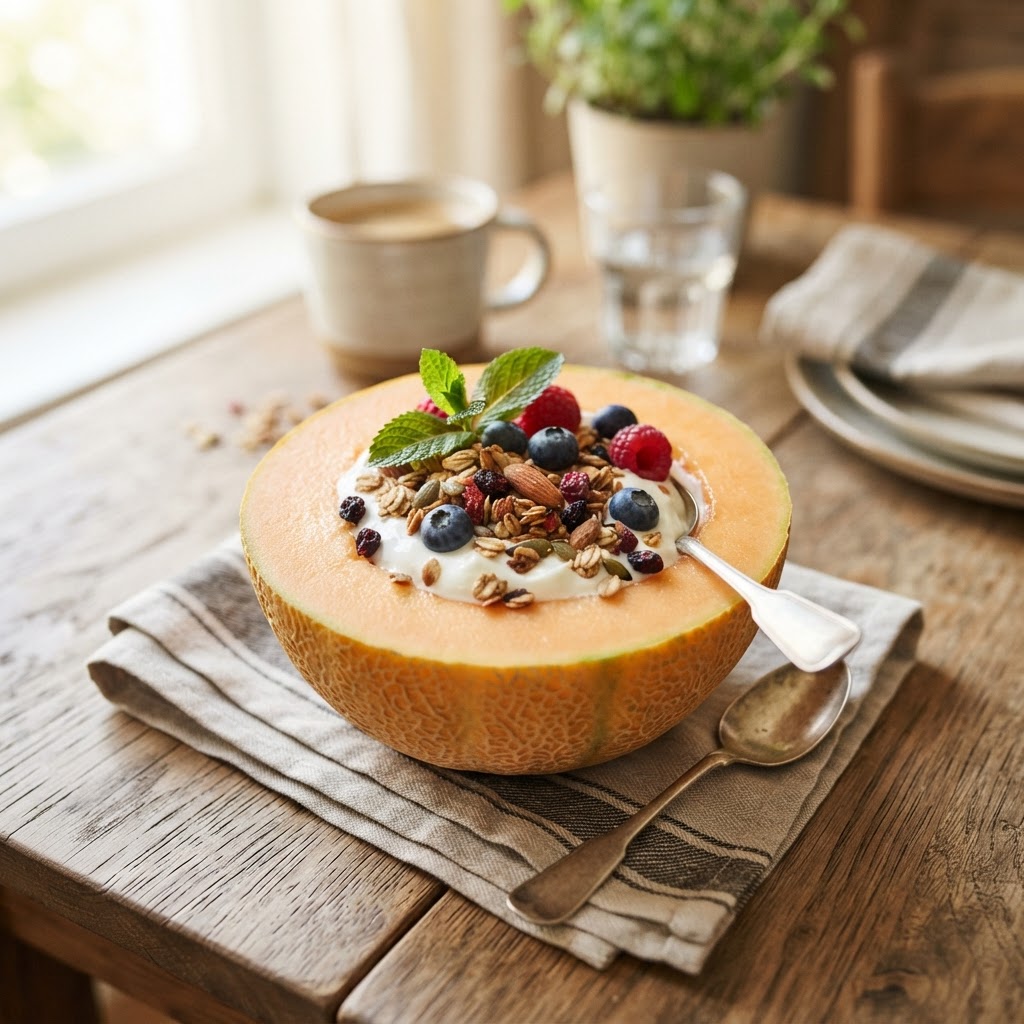
Cantaloupe Breakfast Bowl
A beautiful, nutrient-rich breakfast bowl using cantaloupe as a natural serving vessel.
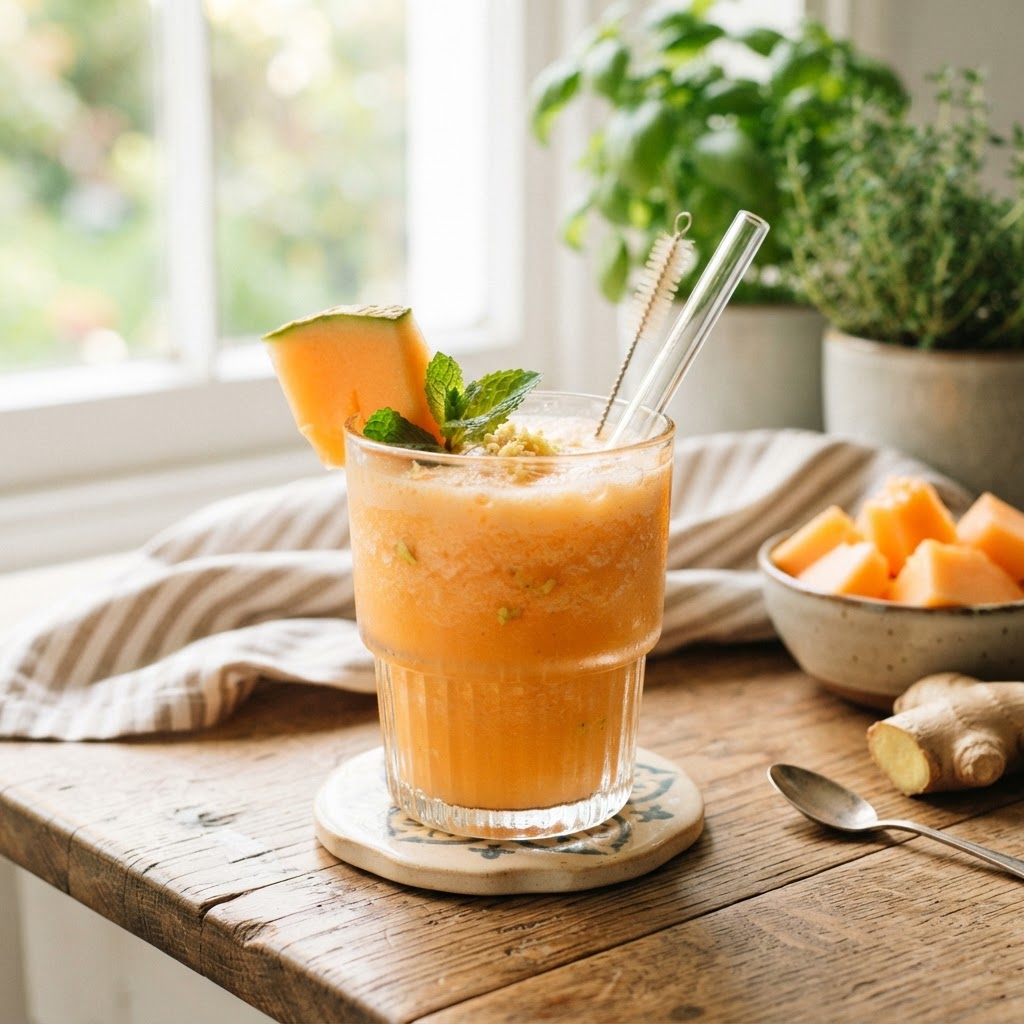
Cantaloupe Ginger Smoothie
A digestive-soothing smoothie that provides vitamins for overall recovery.
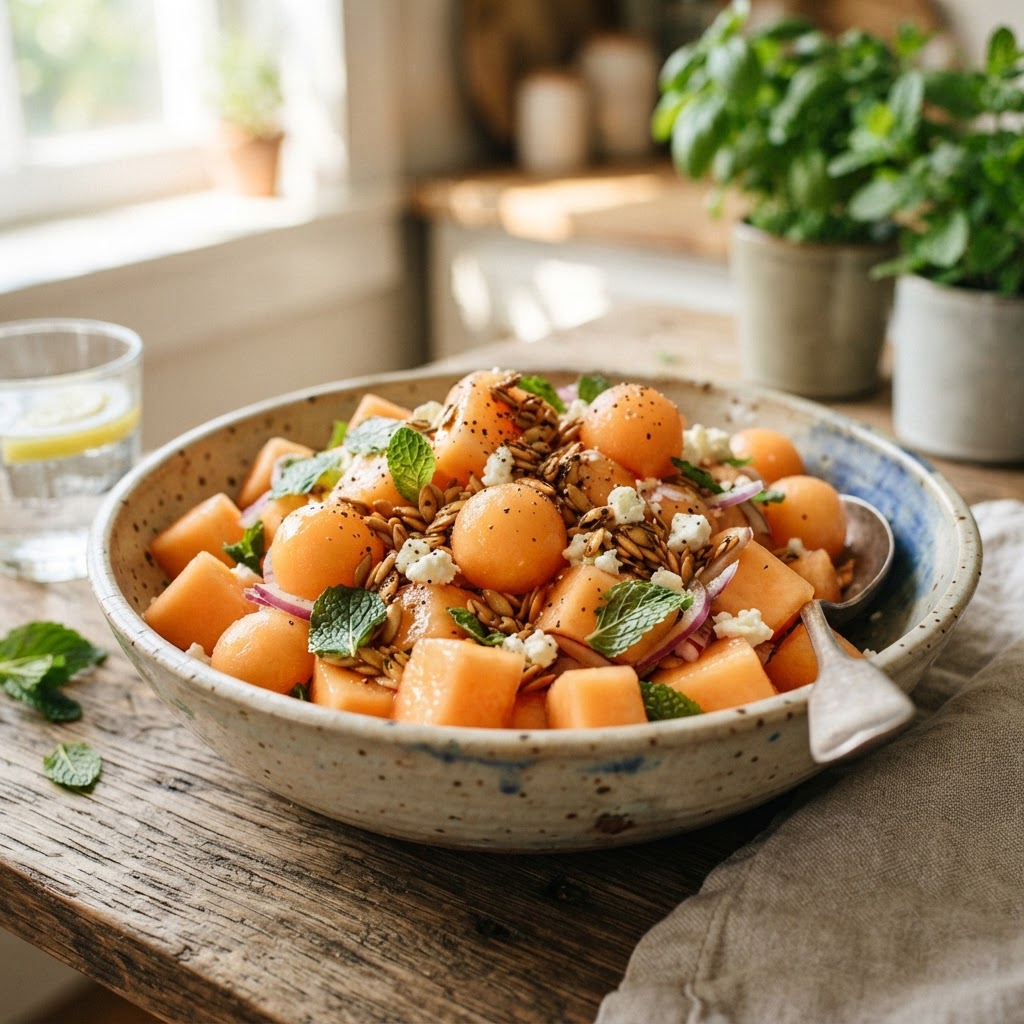
Cantaloupe Salad with Seeds
A refreshing salad providing zinc and healthy fats to support recovery and immune health.
Frequently Asked Questions
Is cantaloupe safe for a diabetic diet?
Yes, in moderation. Because it has high water and fiber content, it has a lower glycemic load than many other sweet fruits when consumed in appropriate portion sizes.
Does cantaloupe help with brain health?
Cantaloupe provides essential antioxidants like vitamin C and beta-carotene, which help reduce neuroinflammation and oxidative stress associated with long-term cognitive decline.