Spinach
Leafy green packed with iron, folate, and vitamin K.
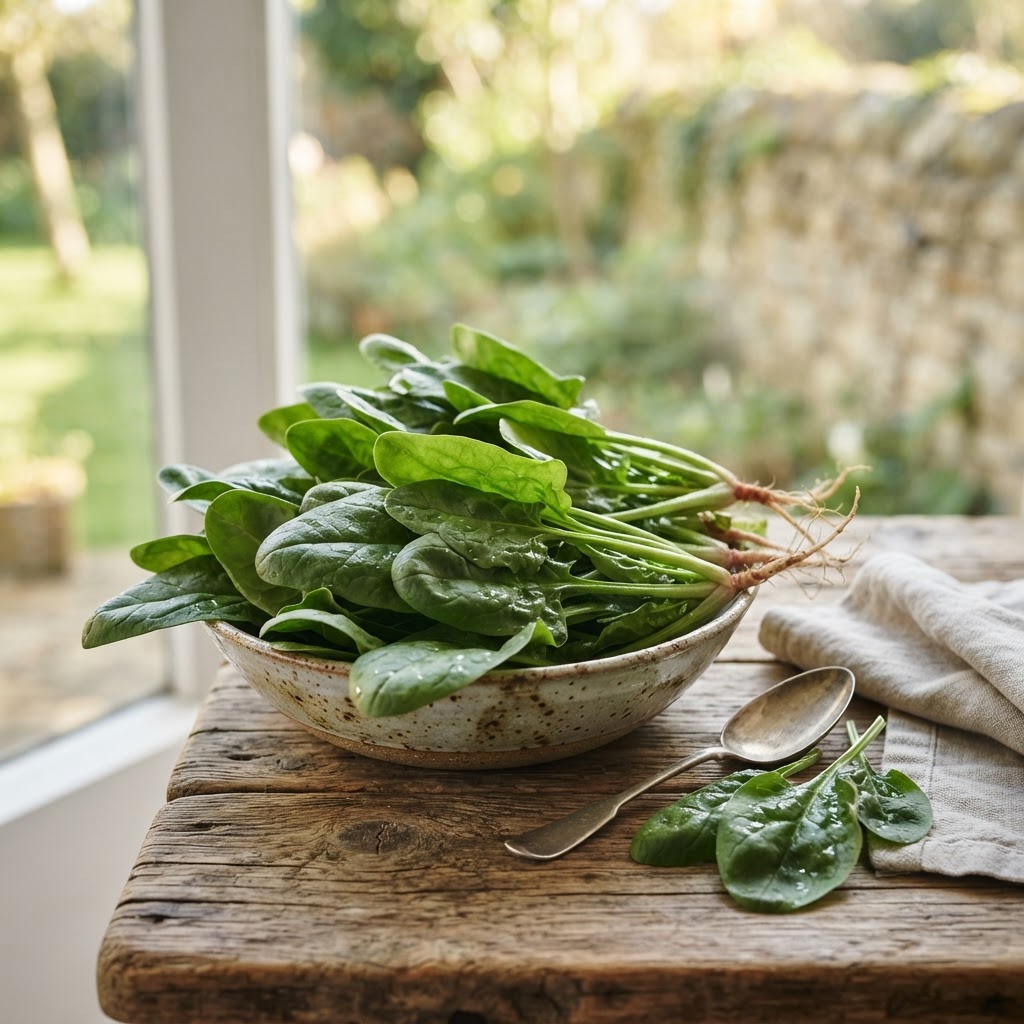
Spinach is a versatile, nutrient-dense leafy green that serves as a cornerstone for vibrant health and sustained energy. With its mild, earthy flavor and tender leaves, it integrates effortlessly into your daily routine to support balanced blood sugar and optimal cognitive function.
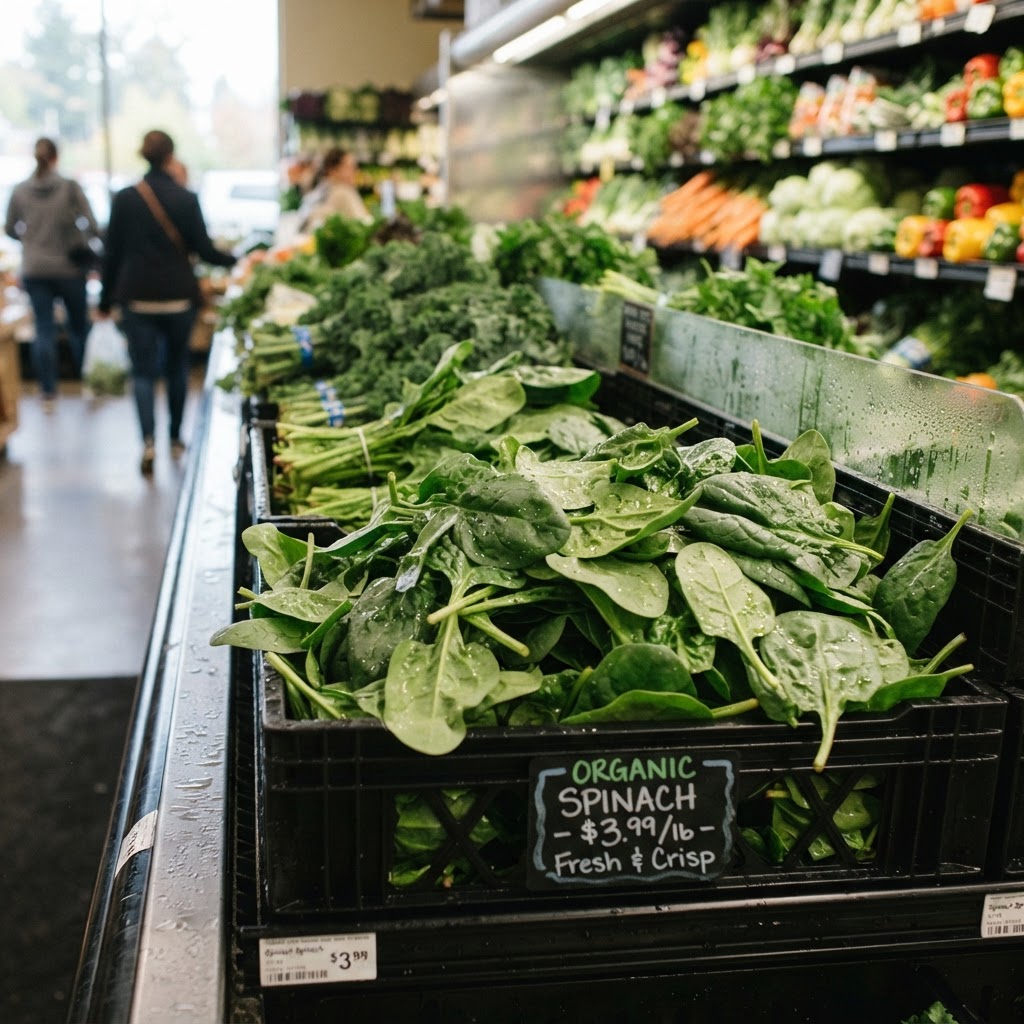
Quick Facts
Nutrition Snapshot
Health Benefits
What the Research Says
Observational studies, such as the Rush Memory and Aging Project, consistently show that individuals who consume one serving of leafy greens daily have a cognitive age 11 years younger than those who rarely consume them.
Meta-analyses indicate a significant inverse association between dietary magnesium intake—abundant in spinach—and the risk of developing type 2 diabetes, highlighting its role in metabolic health.
How to Cook It
Preparation Tips
- •Sauté quickly with a teaspoon of olive oil and garlic to improve the absorption of fat-soluble vitamins like A and K.
- •Avoid overcooking; spinach wilts in seconds, and high heat for too long can degrade sensitive folate content.
- •Blend raw baby spinach into fruit smoothies; it adds significant nutrition without altering the sweetness of your drink.
Flavor Pairings
- •Lemon juice
- •Toasted walnuts
- •Nutmeg
- •Garlic
Storage Tips
- •Wrap fresh spinach in a paper towel before placing it in a bag to absorb excess moisture and prevent slime.
- •Store away from ethylene-producing fruits like apples to keep leaves from yellowing prematurely.
How to Pick the Best One at the Store
Selection Tips
- •Look for leaves that are deep, vibrant green without any signs of yellowing or browning.
- •Ensure the stems are crisp and firm, not limp or slimy.
- •Check for signs of moisture inside the packaging; excess condensation often leads to rapid decay.
- •If buying loose spinach, choose bunches with uniform leaf size to ensure even cooking times.
Recipes Using Spinach
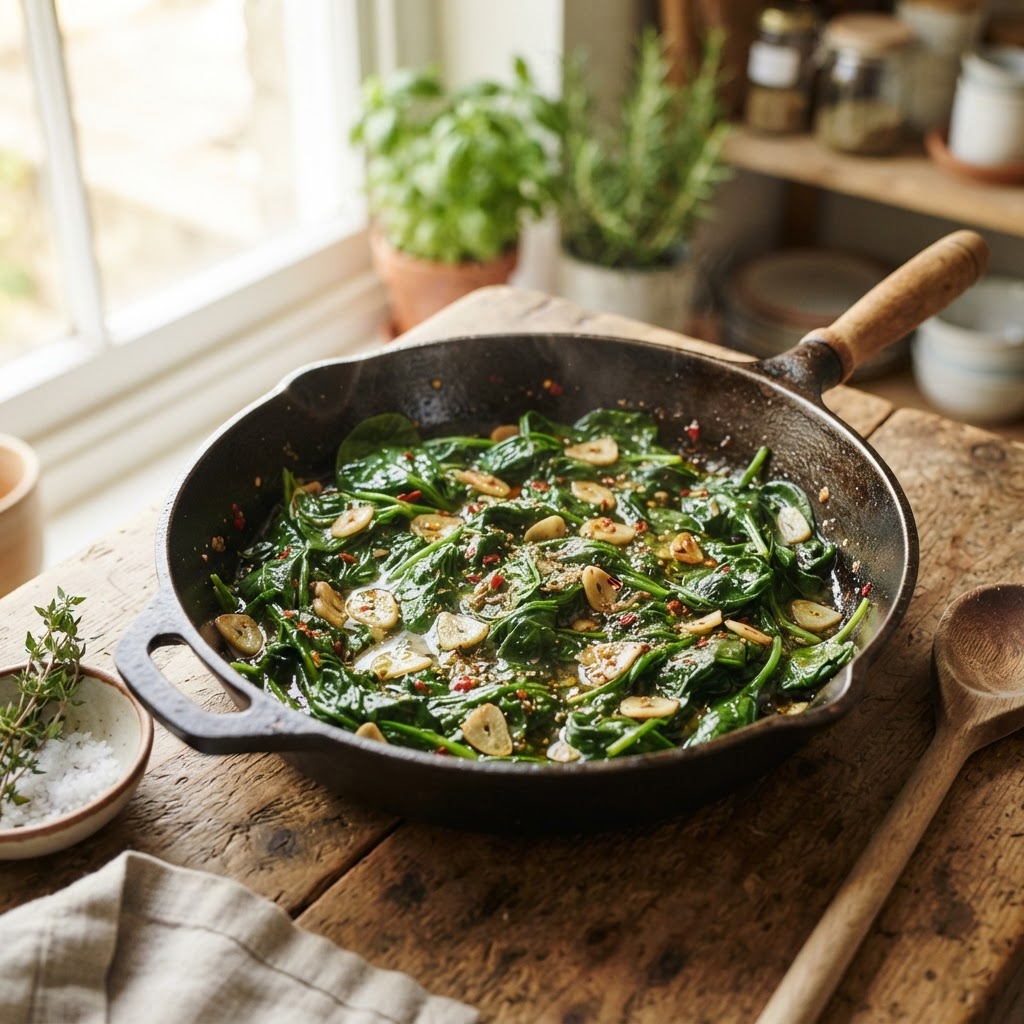
Garlic Sautéed Spinach
A simple iron-rich side dish that supports energy levels.
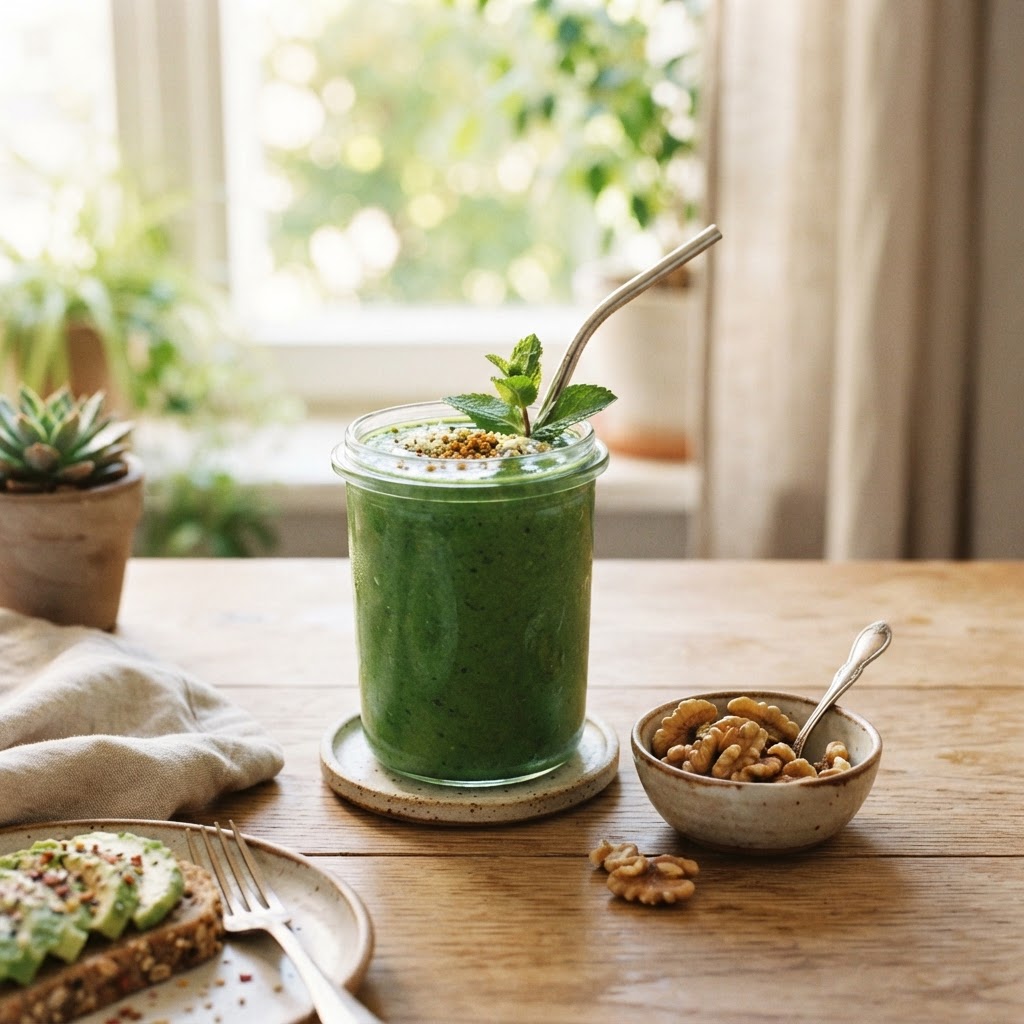
Spinach Walnut Smoothie
An omega-3-rich green smoothie for steady energy and recovery.
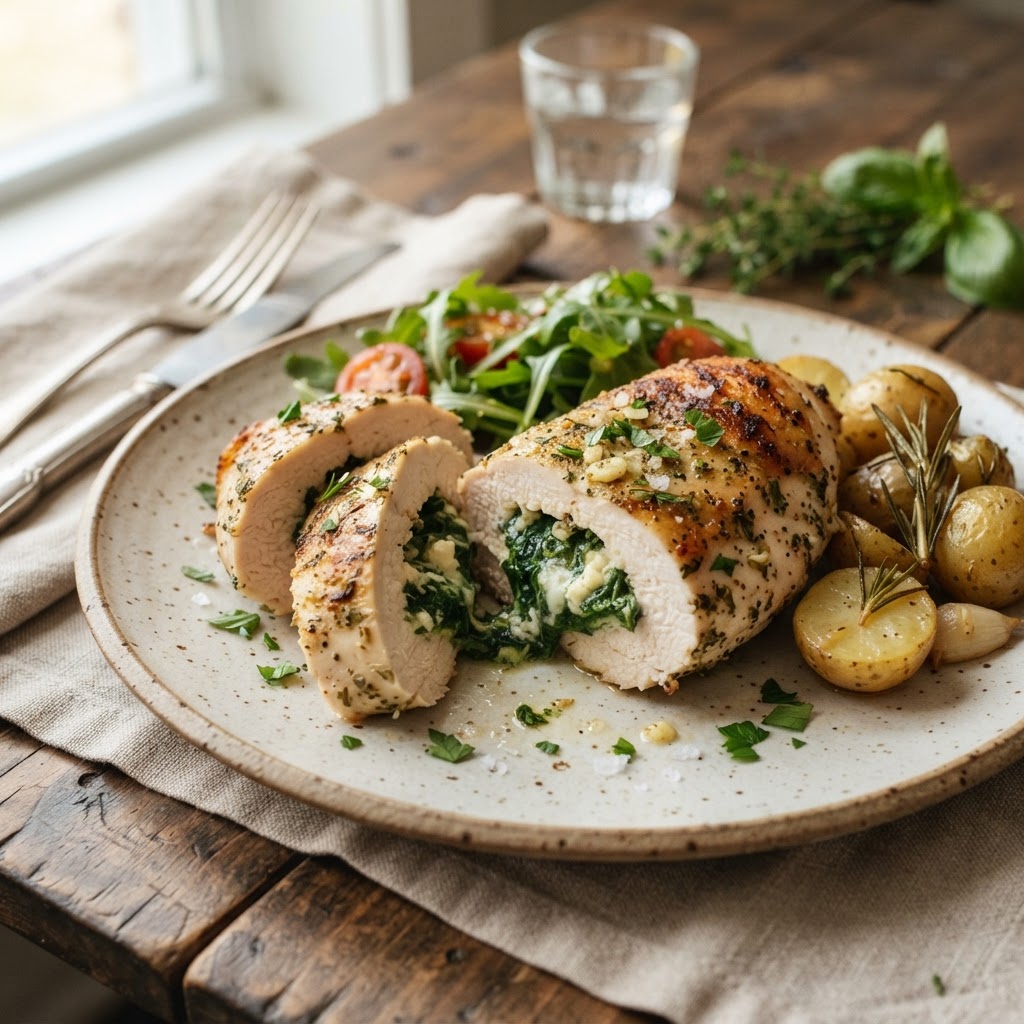
Spinach Stuffed Chicken Breast
Lean protein stuffed with greens for a wholesome recovery meal.
Frequently Asked Questions
Is it better to eat spinach raw or cooked for health benefits?
Both have merits! Raw spinach preserves heat-sensitive vitamins like Vitamin C, while cooking increases the bioavailability of iron, magnesium, and antioxidants like lutein.
Can spinach help with sugar cravings?
Yes, its high magnesium content helps regulate insulin response, which can stabilize energy levels and reduce the physiological drive for quick-fix sugary snacks.