Papaya
Tropical fruit containing papain, a digestive enzyme.
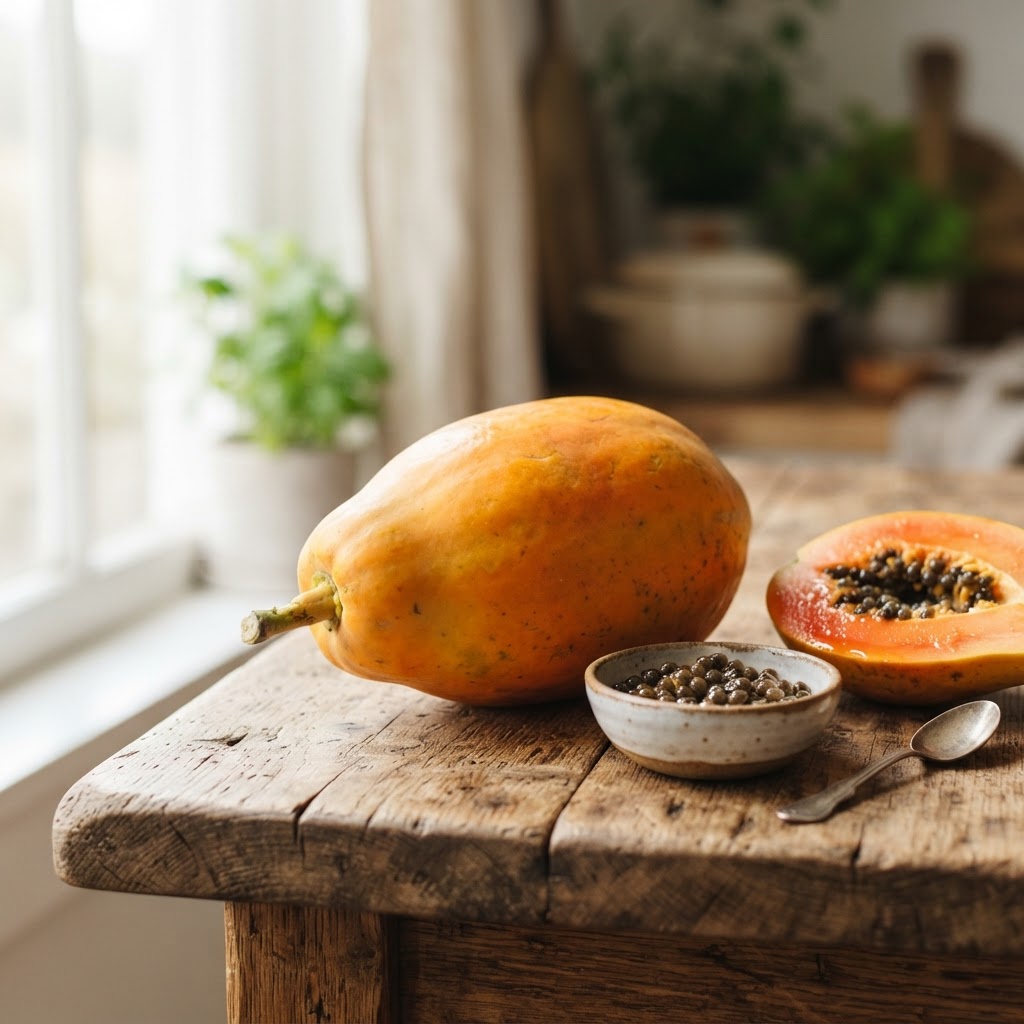
Papaya is a vibrant, tropical fruit celebrated for its buttery texture and delicate, melon-like sweetness. Beyond its culinary appeal, this superfruit is a nutritional powerhouse, offering potent digestive enzymes and antioxidants that support holistic wellness and systemic balance.
Quick Facts
Nutrition Snapshot
Health Benefits
What the Research Says
Studies suggest that high dietary intake of carotenoids found in tropical fruits may be associated with reduced risk of cognitive decline in older adults.
Clinical research consistently demonstrates that papain effectively aids the hydrolysis of dietary proteins, assisting those with gastrointestinal sensitivities.
How to Cook It
Preparation Tips
- •Squeeze fresh lime juice over cubed papaya to brighten the flavor and enhance enzyme activity.
- •Grill papaya halves briefly to caramelize the sugars for a sophisticated, warm dessert.
- •Use green (unripe) papaya in salads like Thai som tum for a crunchy, refreshing texture.
Flavor Pairings
- •Lime and Chili
- •Coconut Milk
- •Ginger
- •Mint
Storage Tips
- •Keep unripe papayas on the counter away from direct sunlight.
- •Once the skin is mostly yellow, store in the refrigerator to slow the ripening process.
- •Wrap cut surfaces in plastic wrap to prevent the fruit from absorbing other odors in the fridge.
How to Pick the Best One at the Store
Selection Tips
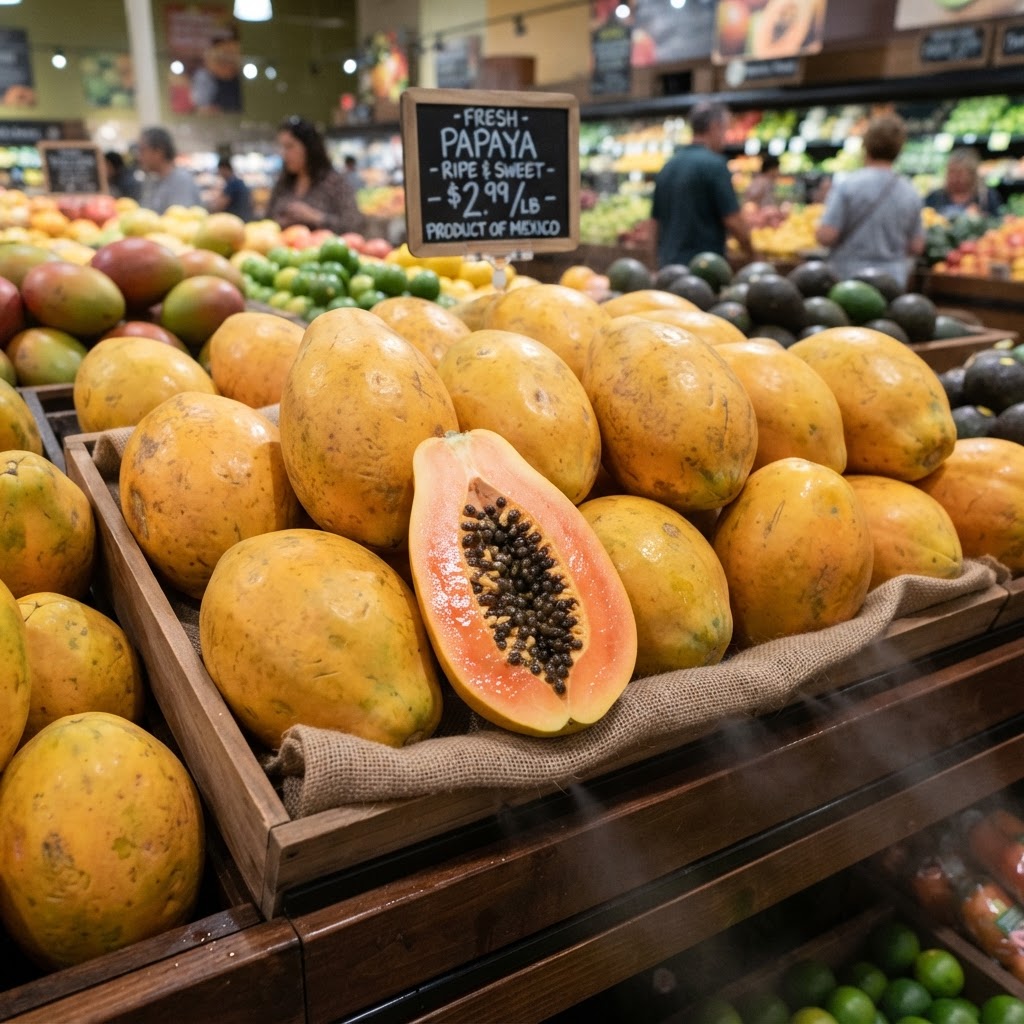
- •Look for skin that is turning from green to mostly yellow or orange.
- •Press gently on the fruit; it should yield slightly to pressure like an avocado.
- •Avoid fruits with dark sunken spots or deep bruises which indicate over-ripening.
- •Check the scent; a sweet, pleasant aroma near the stem indicates a ripe fruit.
Recipes Using Papaya
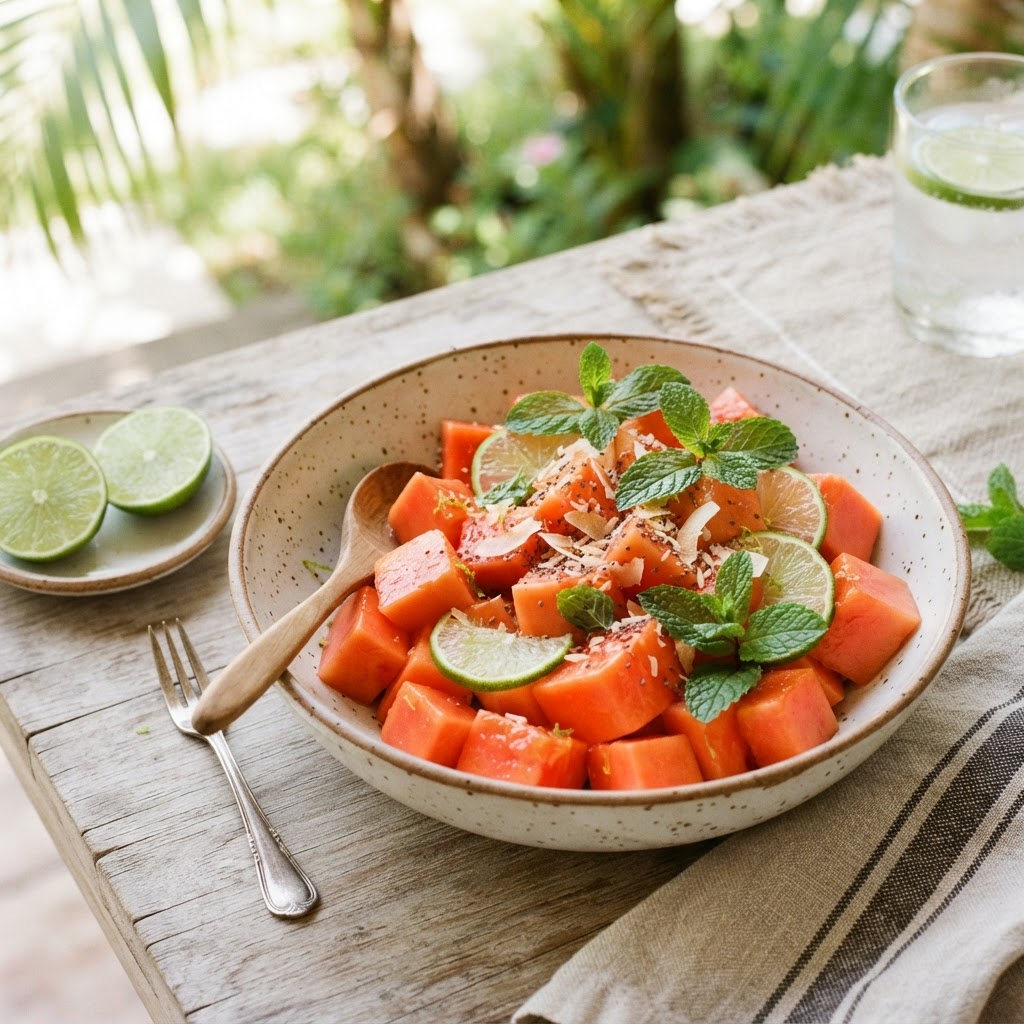
Papaya and Lime Refreshing Bowl
Simple and hydrating, this papaya bowl aids digestion with its natural enzymes.
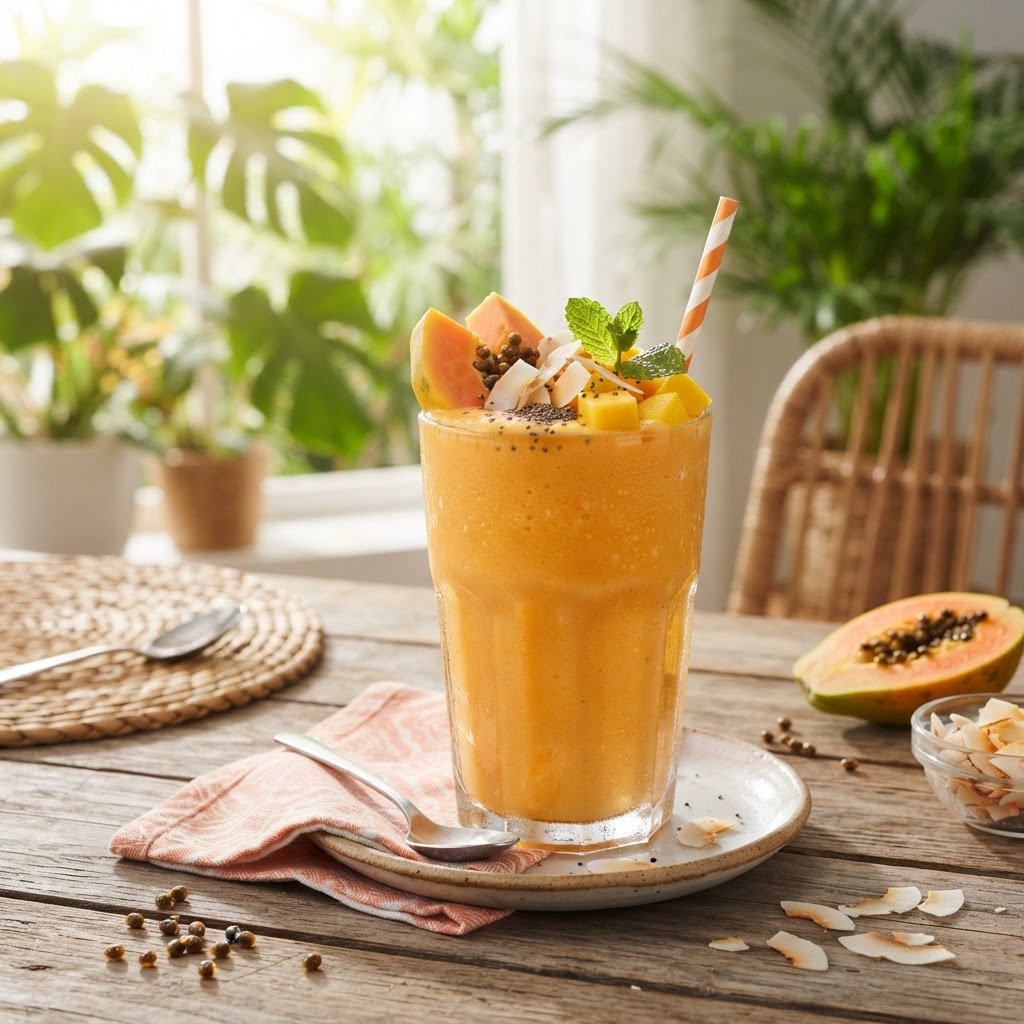
Tropical Papaya Recovery Smoothie
This blend is rich in enzymes that assist with physical recovery and nutrient absorption.
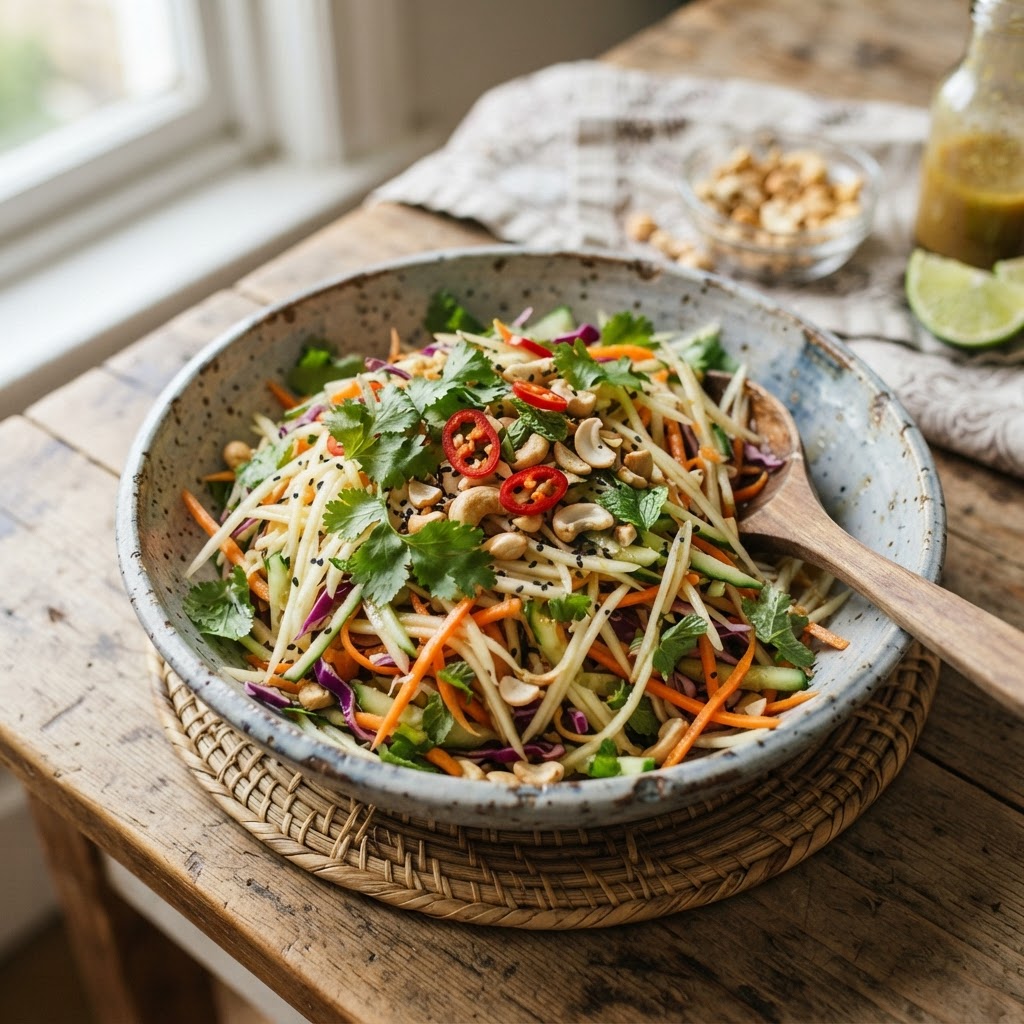
Papaya Ginger Slaw
A zesty slaw that offers gut-soothing ingredients in a delicious, crunchy side dish.
Frequently Asked Questions
Can I eat the papaya seeds?
Yes, papaya seeds are edible and have a peppery, mustard-like flavor; they can be dried and ground as a spice or used sparingly in salads.
Does papaya help with blood sugar spikes?
Papaya has a low glycemic index, meaning it causes a slower, smaller rise in blood sugar levels compared to high-sugar processed snacks.