Eggplant
Meaty purple vegetable rich in fiber and antioxidants.
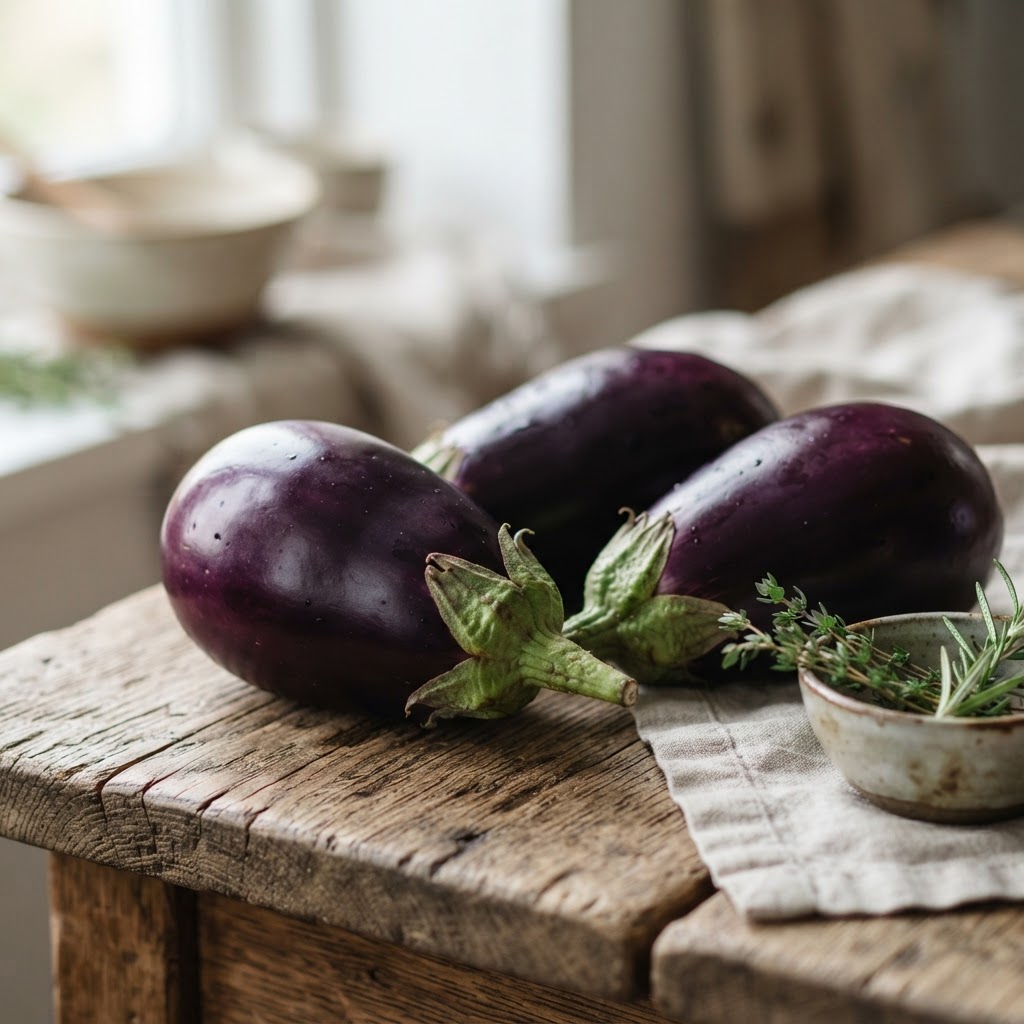
Eggplant is a versatile, nutrient-dense member of the nightshade family, celebrated for its elegant, glossy skin and unique ability to soak up complex flavors. Often underappreciated, this humble vegetable offers a sophisticated texture and a wealth of protective phytonutrients that support long-term metabolic and neurological health.
Quick Facts
Nutrition Snapshot
Health Benefits
What the Research Says
Studies indicate that nasunin, an iron-chelating phytonutrient, may help prevent cellular oxidative damage, which is a known factor in age-related cognitive decline.
While eggplant is low-glycemic, most research on its blood-sugar-lowering effects has been conducted in animal models or in vitro, requiring more clinical human trials to confirm efficacy.
How to Cook It
Preparation Tips
- •Salt the sliced eggplant for 20 minutes before cooking to draw out moisture and remove any potential bitterness.
- •Use a brush to lightly coat with oil rather than letting it soak up large amounts, which helps keep the dish lighter.
- •Roast whole until the skin collapses to achieve the creamiest texture for dips like baba ganoush.
Flavor Pairings
- •Garlic and Tahini
- •Fresh Tomatoes and Basil
- •Cumin and Coriander
- •Lemon juice and Parsley
Storage Tips
- •Keep eggplant away from ethylene-producing fruits like bananas to prevent rapid softening.
- •Do not wash until ready to use, as excess moisture on the skin can lead to premature decay.
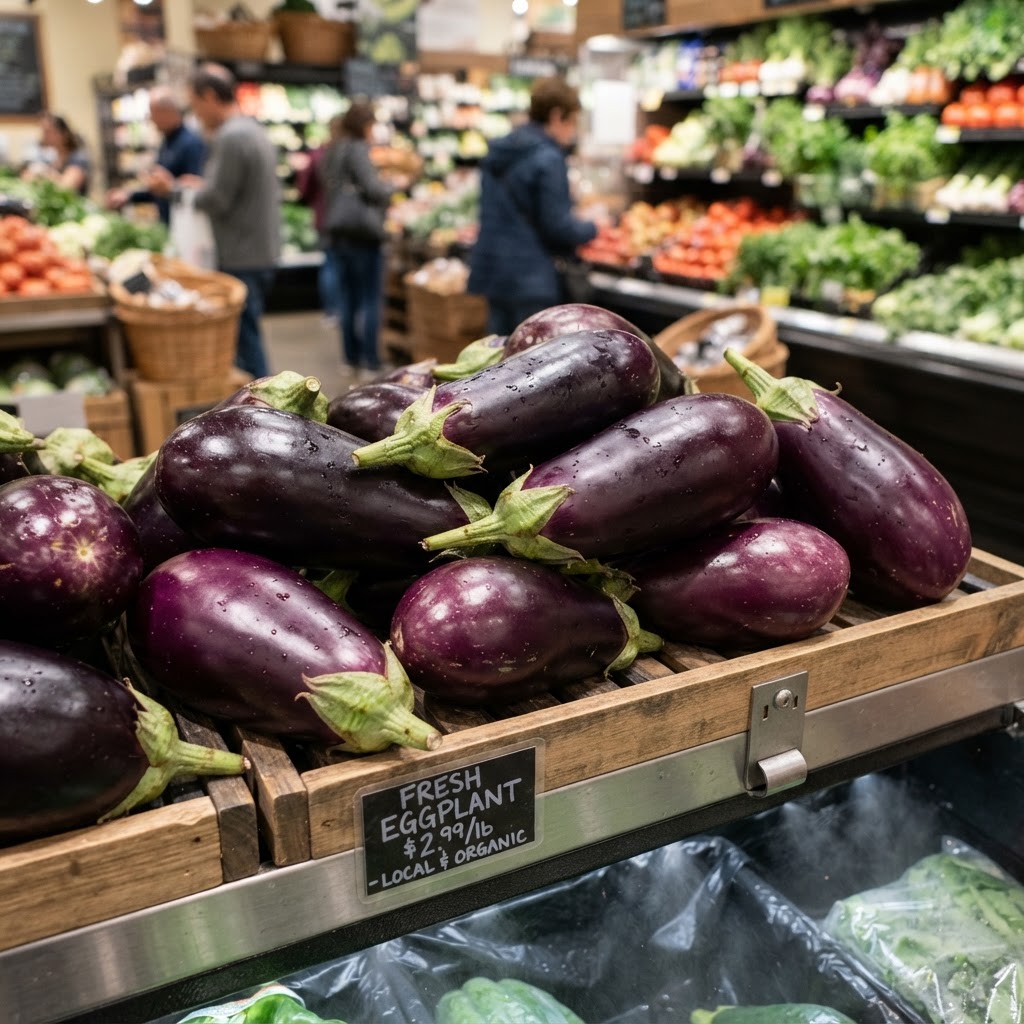
How to Pick the Best One at the Store
Selection Tips
- •Look for skins that are tight, glossy, and free of blemishes or brown spots.
- •The eggplant should feel firm and heavy for its size, indicating high water content and freshness.
- •Gently press the surface; if the flesh springs back immediately, it is perfectly ripe.
- •Ensure the green stem cap is vibrant and not shriveled or dry.
Recipes Using Eggplant
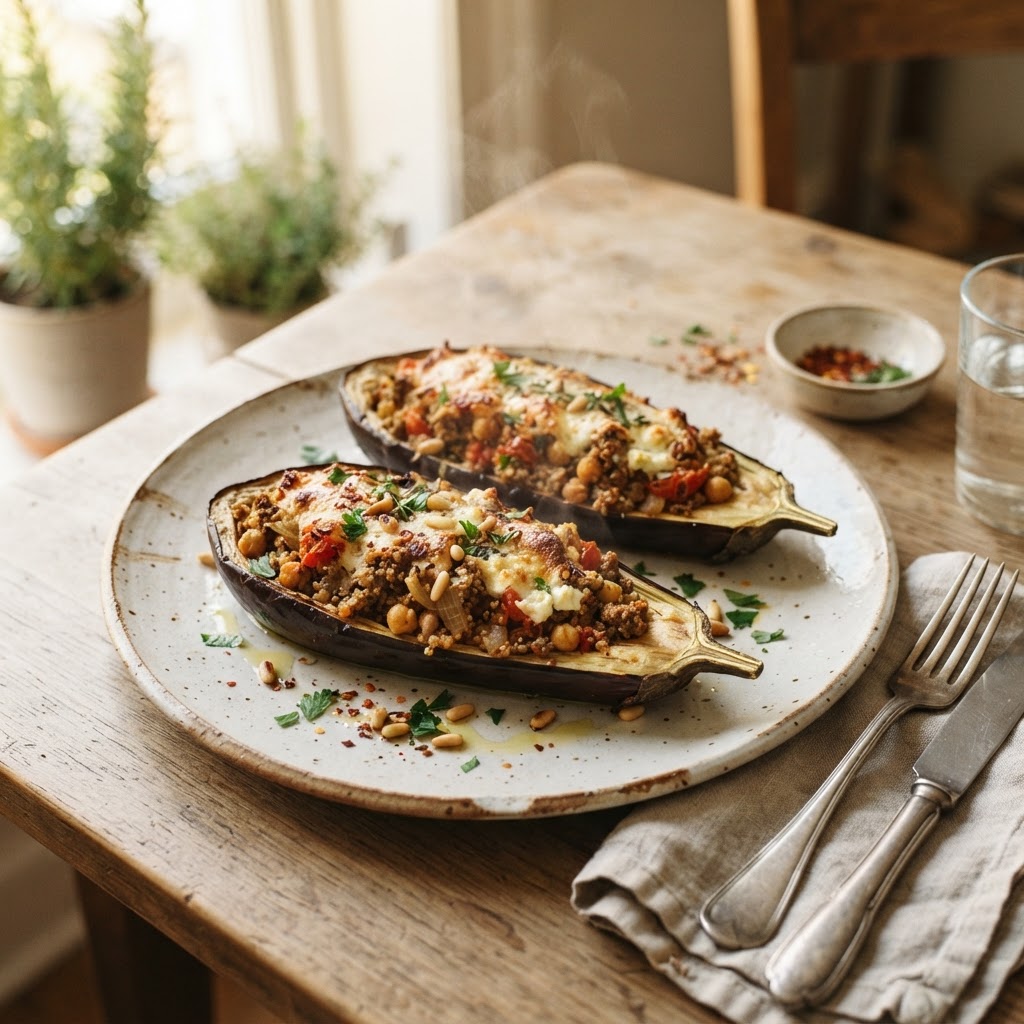
Roasted Garlic Eggplant Boats
These roasted eggplant halves are a savory, low-carb vessel for healthy fats and herbs.
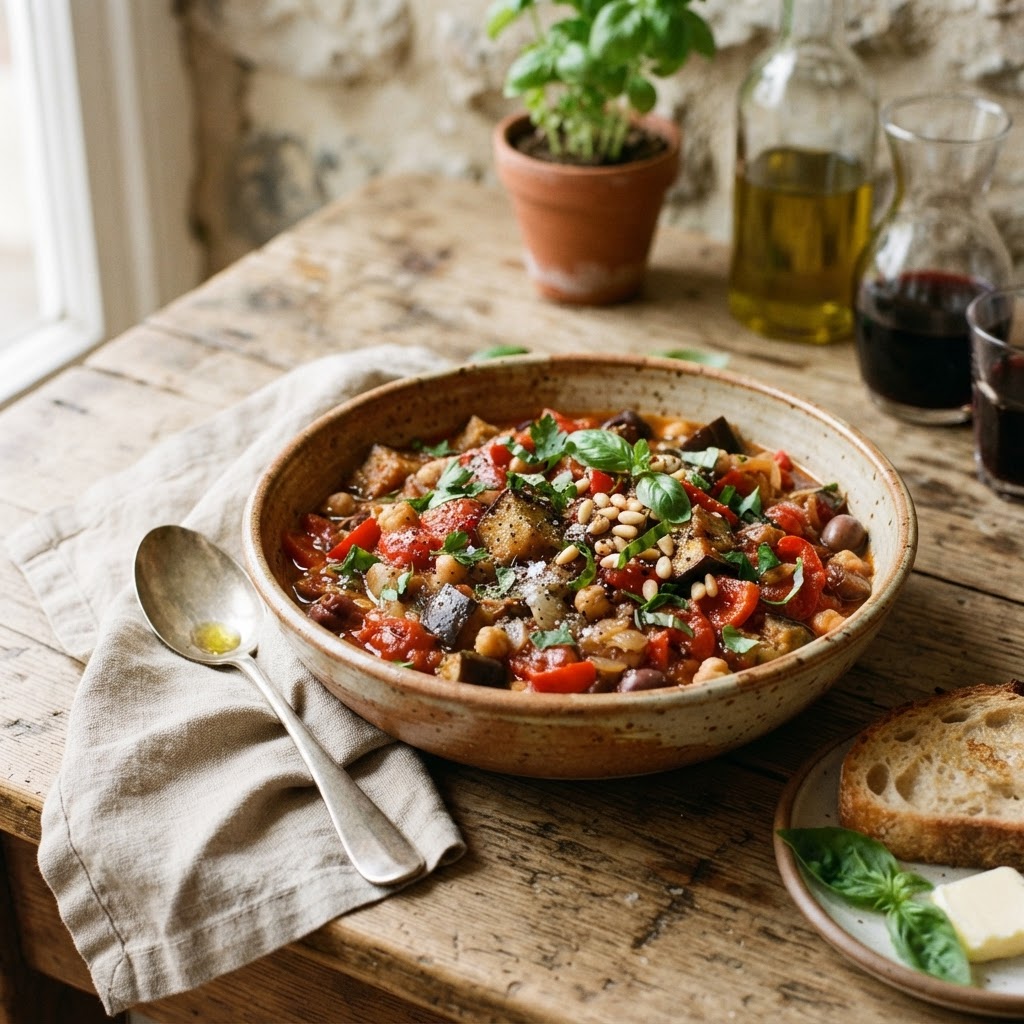
Eggplant and Tomato Stew
A traditional Mediterranean-style stew that focuses on gut health through fiber and nutrient-dense vegetables.

Baked Eggplant Fries
A healthy alternative to traditional fries, these eggplant strips are crunchy and delicious.
Frequently Asked Questions
Do I have to peel the eggplant?
No, the skin is edible and actually contains the highest concentration of beneficial phytonutrients like nasunin.
Is eggplant considered a low-glycemic food?
Yes, because of its low carbohydrate count and high fiber content, it has a minimal impact on blood glucose levels.