Back to Ingredient LibraryVegetables
Daikon Radish
Raphanus sativus var. longipinnatusAlso known as: Japanese Radish, White Radish, Mooli
A long, mild white radish with a crisp bite, used raw, pickled, or simmered in Asian soups and stews.
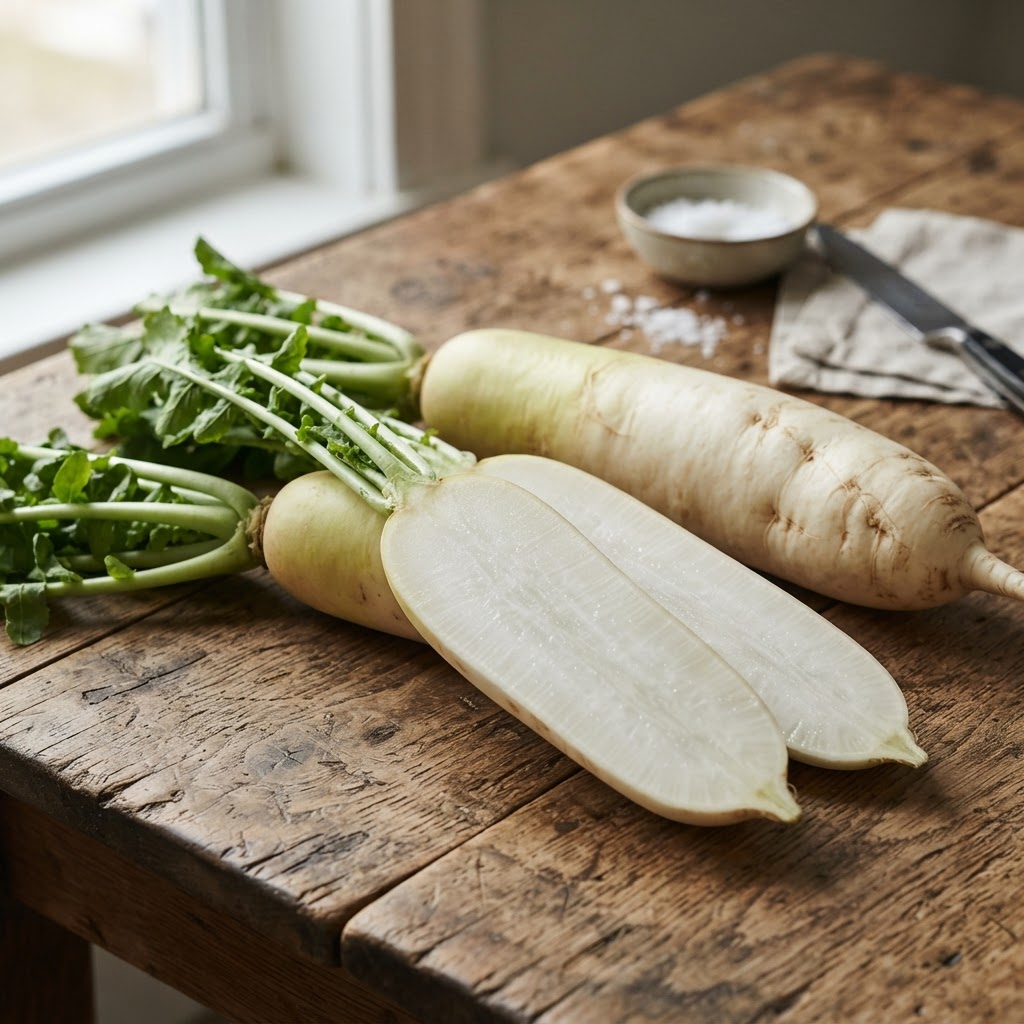
Daikon is a large, mild-tasting white radish popular across Japanese, Korean, and Chinese cooking. Its long cylindrical root has crisp, juicy flesh that is much milder than smaller red radishes. Daikon can be enjoyed raw in salads, grated as a garnish, quick-pickled for banchan and takuan, or simmered in soups and braises where it absorbs surrounding flavors while becoming tender.
Quick Facts
Flavor ProfileMild, slightly peppery, subtly sweet
TextureCrisp raw, tender when cooked
OriginEast Asia
SeasonalityBest in fall and winter
StorageRefrigerate in a plastic bag for up to 2 weeks
Cooking MethodsPickling, simmering, grating raw, stir-frying
Nutrition Snapshot
Vitamin CGood source
PotassiumGood source
FiberModerate
Calories~18 per cup, raw
Health Benefits
How to Cook It
Preparation Tips
- •Peel before using, as the skin can be tough and bitter.
- •Grate raw daikon as a garnish for grilled fish or tempura.
- •Simmer in broths and stews to let it soak up flavor while becoming tender.
Flavor Pairings
- •Soy sauce
- •Rice vinegar
- •Ginger
- •Sesame
- •Carrots
- •Miso
Storage Tips
- •Remove leafy tops if attached, as they draw moisture from the root.
- •Store in a perforated bag in the crisper drawer.
How to Pick the Best One at the Store
Selection Tips
- •Choose firm, smooth roots without soft spots or cracks.
- •Smaller to medium daikon tends to be more tender.
Frequently Asked Questions
Do I need to peel daikon?
Yes, the outer skin is typically peeled away before cooking or eating raw.
Can daikon be eaten raw?
Yes, it's often grated or thinly sliced and eaten raw in salads and as a garnish.